How Much Should You Really Budget for Rice Cooker Packaging Cost?
You just received three quotations from rice cooker suppliers, and the packaging cost ranges from $0.80 to $2.50 per unit. One supplier offers the lowest price, but you are not sure if that packaging will survive the 40-day sea journey1 to your warehouse. You want to save money, but you also worry about receiving damaged goods and losing customer trust.
Rice cooker packaging cost is not a fixed number you can compare across suppliers without context. It includes multiple components like color boxes, outer cartons, inner protection, manuals, and labels, and the right packaging level depends on your shipping method, sales channel, and acceptable damage risk. A cheaper packaging option may cost you more if it increases product damage during transport and handling.
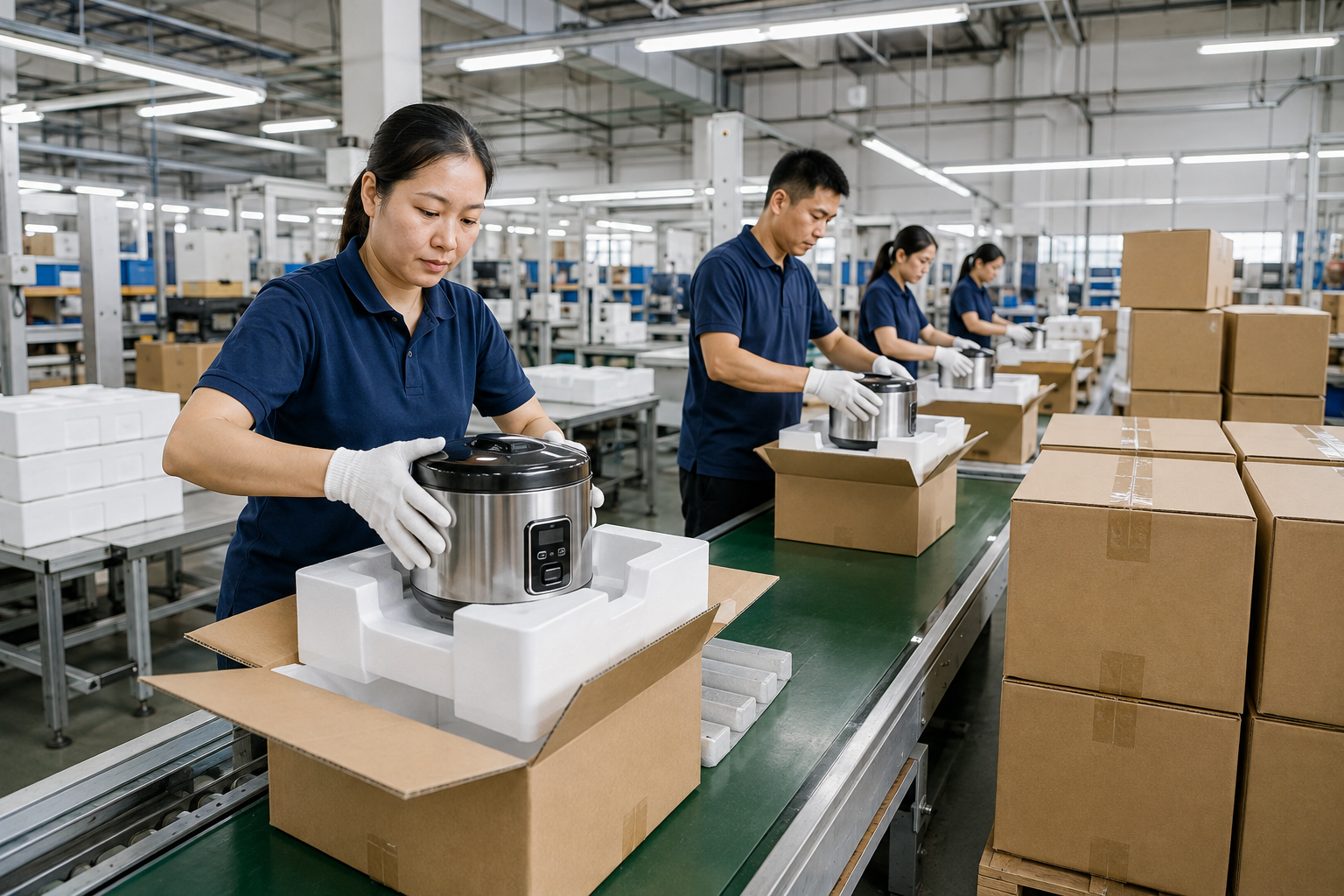
In quotation discussions with overseas buyers, I often see the same mistake. Buyers compare the packaging cost line in different supplier quotations and assume the supplier with the lower number offers better value. But that lower cost might exclude stronger cartons, thicker inner foam, or proper labeling materials. Before you decide which packaging to choose, you need to understand what the cost actually covers and how it connects to your total landed risk.
What Components Make Up the Rice Cooker Packaging Cost?
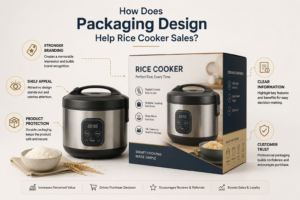
When buyers ask "how much is the packaging," they usually mean the color box that wraps the rice cooker. But in factory quotations, packaging cost includes several items, and each one serves a specific purpose in protecting the product and meeting import requirements.
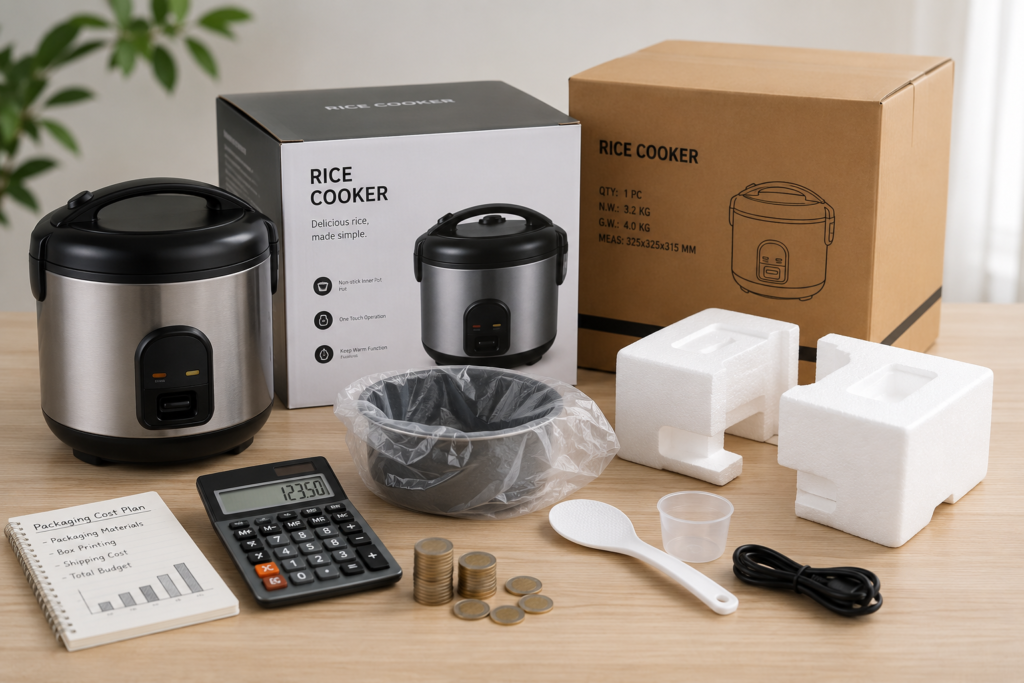
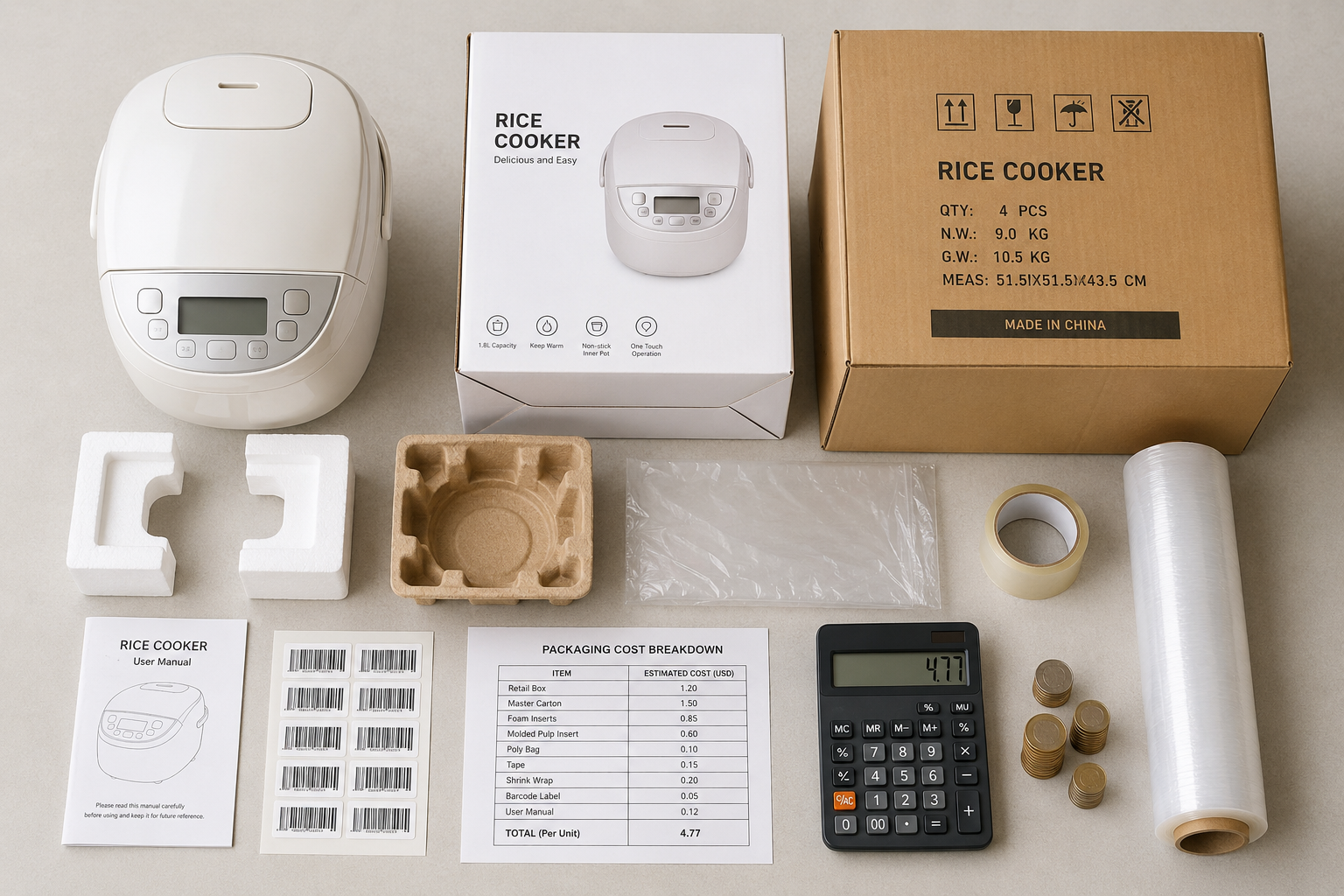
Rice cooker packaging cost typically includes the color box, outer carton, inner protection materials, instruction manual, product labels, warranty cards, and sometimes additional items like poly bags or accessory packaging. Each component adds to the total cost, and removing any of them may reduce the price but also reduce protection or compliance.
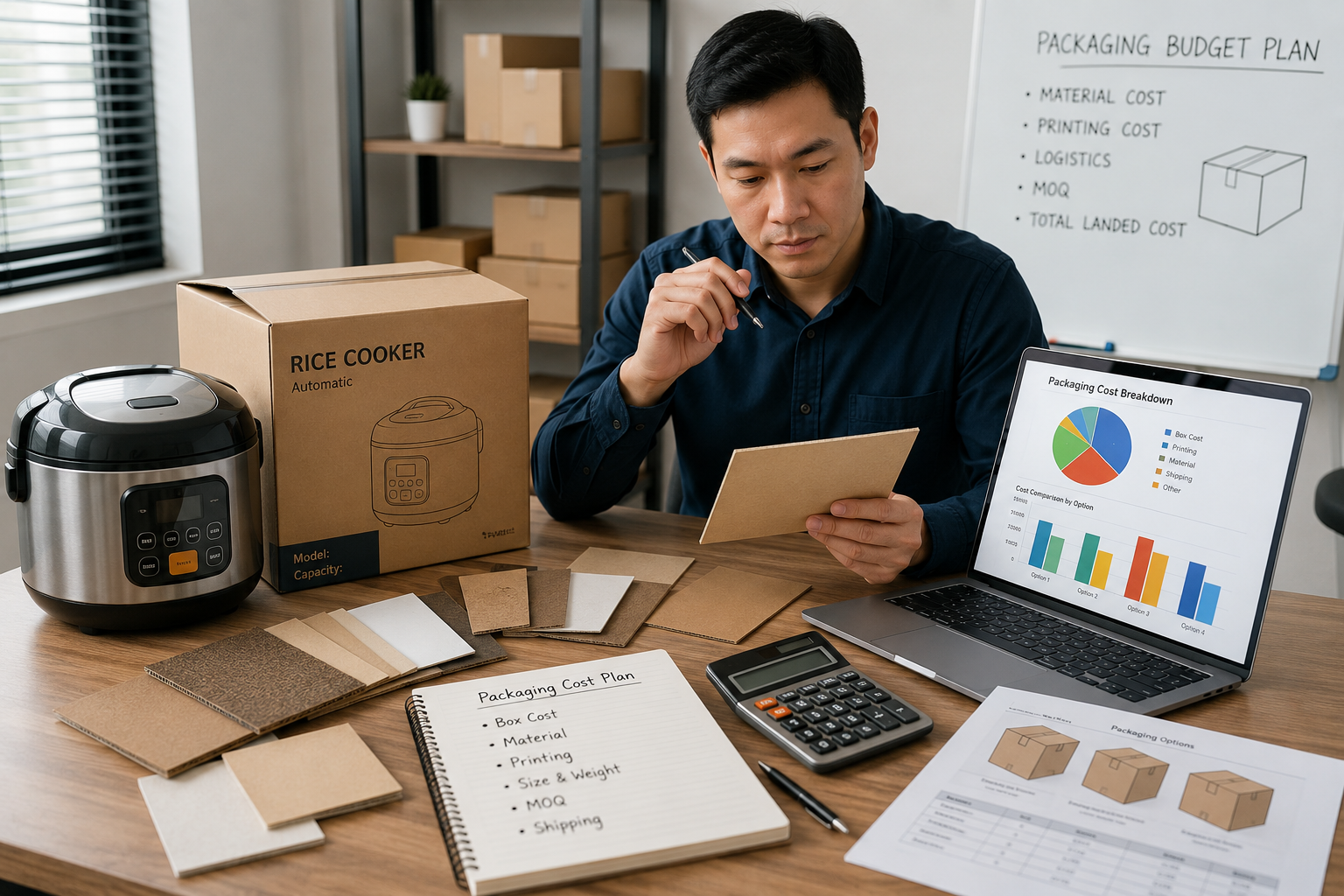
Let me break down the main components based on what we include in our factory quotations. The color box is the printed carton that holds one rice cooker and displays the product photos, features, and barcode. This box protects the product from light scratches and dust, and it also serves as the retail display package if you sell in stores. The cost of the color box depends on the paper thickness, printing quality, and special finishes like glossy coating or embossing.
The outer carton is the brown corrugated box that holds multiple color boxes during shipping. For example, if you pack six rice cookers in one outer carton, that carton must be strong enough to stack in a container and survive rough handling at the port. Outer carton cost depends on the corrugated board grade, flute type, and carton size. A stronger carton costs more, but it reduces the risk of carton collapse during stacking.
Inner protection materials include foam, EPE, or molded pulp inserts2 that hold the rice cooker in place inside the color box. These materials absorb shocks and prevent the lid, handles, or non-stick inner pot from getting damaged during transport. Cheaper packaging often uses thinner foam or no foam at all, which increases the chance of product damage.
Instruction manuals, labels, and warranty cards also add to the packaging cost. The manual is usually printed on coated paper and folded into multiple pages. Labels include the product label on the rice cooker body, carton labels with shipping marks, and sometimes country-specific labels like energy ratings or importer contact information. If your destination country requires specific label formats or languages, this will affect the cost.
Other items like poly bags, cable ties, and accessory packaging may also be included. For example, if the rice cooker comes with a measuring cup and rice paddle, these accessories need separate small bags or boxes. Each additional item increases the packaging cost by a small amount, but they add up when you multiply by thousands of units.
| Packaging Component | Purpose | Cost Factor |
|---|---|---|
| Color box | Retail display and product protection | Paper thickness, printing quality, coating |
| Outer carton | Shipping protection and stacking strength | Corrugated board grade, carton size |
| Inner protection | Shock absorption during transport | Foam thickness, material type, molding complexity |
| Instruction manual | User guidance and compliance | Paper quality, page count, language versions |
| Product labels | Identification and regulatory compliance | Label material, printing method, quantity of label types |
| Accessory packaging | Protection and presentation of included items | Bag or box type, printing requirements |
When you compare packaging costs across suppliers, make sure each quotation includes the same components. A supplier quoting $0.80 packaging might exclude the outer carton or use single-layer foam, while a $2.50 quotation might include a five-layer corrugated carton and full molded pulp protection. The numbers are only comparable when the packaging structure is identical.
How Does Packaging Structure Affect Transport Damage Risk?
I once had a customer who chose the cheapest packaging option for a 10,000-unit order. The color boxes looked fine, and the outer cartons met the basic size requirements. But after the container arrived at the destination port, the customer reported that 15% of the cartons were deformed3 and some rice cooker lids were cracked. The customer asked us to compensate for the damaged goods, but the root cause was the packaging structure, not the product quality.
The packaging structure determines how well the rice cooker survives rough handling, stacking pressure, and vibration during sea shipping. Weak packaging may look acceptable in the factory, but it fails during the 40-day journey and multiple port transfers, leading to product damage and customer complaints.
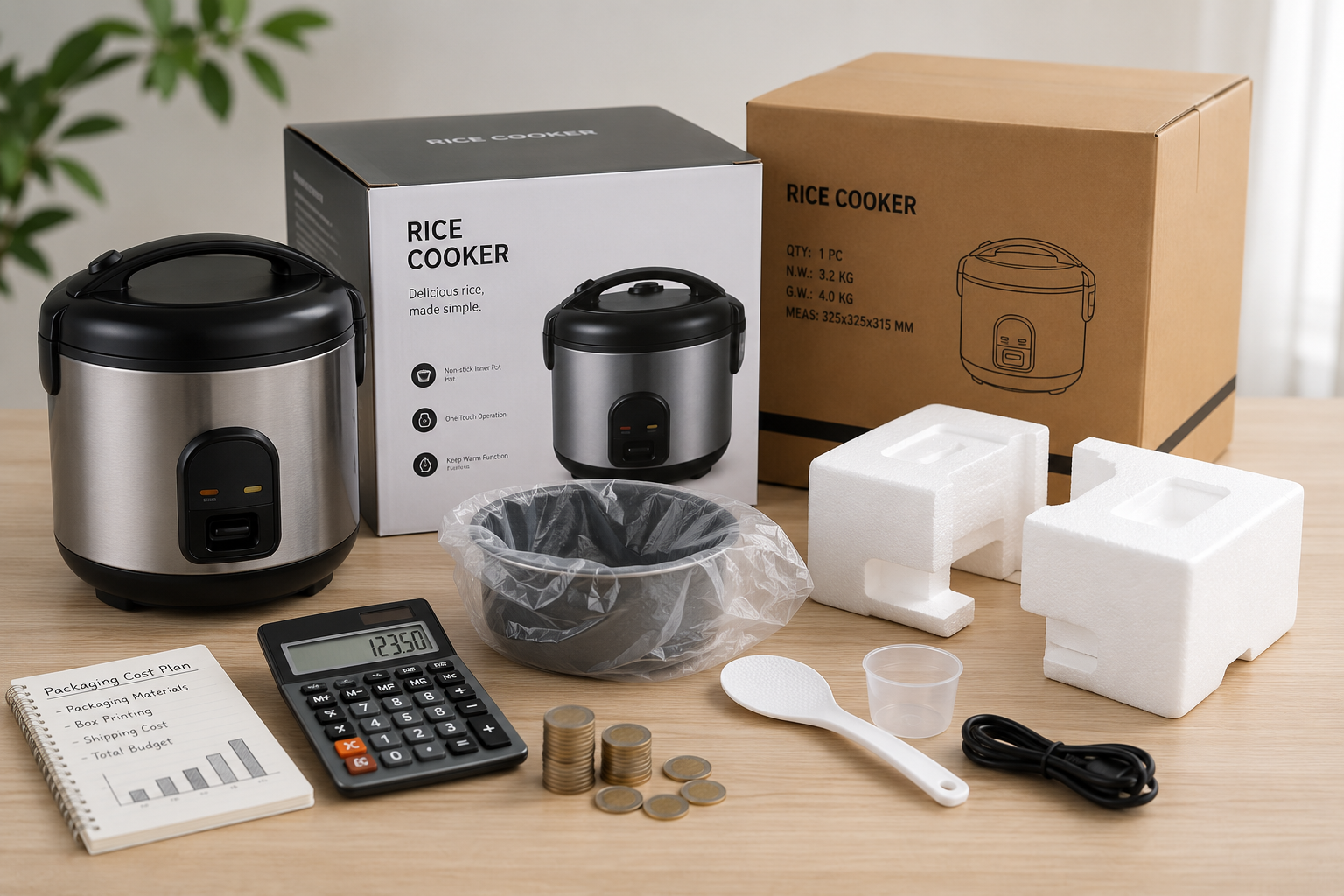
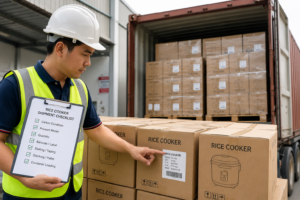
Let me explain how packaging structure connects to transport damage. During sea shipping, your container goes through several stages where the packaging is tested. First, the cartons are stacked inside the container, and the bottom cartons carry the weight of all the cartons above them. If the outer carton is made from thin corrugated board, it may collapse under the stacking pressure, especially in hot and humid conditions where the paper loses strength4.
Second, the container is moved by forklifts and cranes at the origin port, during transshipment, and at the destination port. Each time the container is lifted or placed down, the cargo inside experiences impact and vibration. If the inner protection is too thin or missing, the rice cooker moves inside the color box and hits the walls. This can crack the plastic lid, dent the outer body, or scratch the non-stick coating of the inner pot.
Third, after the container is unloaded, the cartons are moved to your warehouse or distribution center. If the cartons are deformed, warehouse workers may need to repack the goods or handle them more carefully, which increases labor cost. If some rice cookers are damaged, you either need to negotiate compensation with the supplier or write off the damaged units as a loss.
I have seen buyers who saved $0.50 per unit on packaging cost but lost $5.00 per unit on damaged goods and customer returns. The total landed cost became higher than choosing stronger packaging from the beginning. This is why I always ask buyers to define their acceptable damage rate before choosing a packaging structure.
For example, if you are importing 5,000 rice cookers and your acceptable damage rate is 1%, that means you expect up to 50 damaged units. If your retail price per unit is $30 and the packaging upgrade costs $0.50 more per unit, the extra packaging cost is $2,500. But if the cheaper packaging results in 150 damaged units instead of 50, you lose $3,000 in product value. In this case, the packaging upgrade actually saves you $500.
The key factors that affect transport damage risk include outer carton strength, inner protection thickness, color box structure, and the number of rice cookers packed per carton. Stronger packaging costs more, but it reduces the chance of damage. Weaker packaging costs less, but it increases the damage risk. The right choice depends on your shipping conditions and how much damage you can afford to absorb.
How Should You Define Your Packaging Requirements Before Asking for a Quote?
Many buyers send us an inquiry like this: "Please quote your best price for 3000 units of 1.8L rice cooker, including packaging." But this request does not give us enough information to recommend the right packaging level. Without knowing your sales channel, shipping method, and risk tolerance, we can only quote a standard packaging option, which may not match your actual needs.
Before asking suppliers for a packaging quote, you should define your sales channel, shipping method, destination country requirements, and acceptable damage rate. These factors determine the minimum packaging standard you need, and they help suppliers recommend the most cost-effective solution for your situation.
Let me walk you through the questions you should answer before requesting a packaging quotation. First, where will you sell the rice cookers? If you sell to retail stores, the color box needs to look attractive on the shelf and include all the product information, barcodes, and marketing images. If you sell online or to wholesalers, the color box can be simpler because customers do not see it before purchase. Retail packaging usually costs more because it requires better printing quality and special finishes.
Second, how will you ship the goods? If you use sea shipping, the packaging needs to survive 40 to 60 days of transport, high humidity, and rough handling. If you use air freight, the packaging can be lighter because the transport time is shorter and handling is more controlled. If you ship by express courier for small quantities, you may need additional outer protection because express shipments go through more sorting facilities.
Third, what are the destination country requirements? Some countries require specific label formats, energy ratings, or importer contact information on the packaging. For example, if you import to the European Union, the packaging may need to include the CE marking and recycling symbols5. If you import to the United States, you may need to include Proposition 65 warnings6 for certain materials. These requirements affect the label cost and the color box design.
Fourth, what is your acceptable damage rate? If you cannot accept any damage and expect 100% perfect arrival, you need the strongest packaging option with five-layer corrugated cartons, thick foam, and careful packing. If you accept a 1% to 2% damage rate as a normal trade-off, you can choose a mid-level packaging structure. If you prioritize low cost and accept up to 5% damage, you can choose lighter packaging and plan for some product loss.
I recommend writing down these details in your inquiry email. For example: "We plan to sell these rice cookers through our online store, ship by sea to the United States, and our acceptable damage rate is 1%. Please recommend a packaging structure and quote the cost." This gives the supplier clear guidance and helps you receive a quotation that matches your needs.
| Question | Why It Matters | Impact on Packaging Cost |
|---|---|---|
| Where will you sell the rice cookers? | Retail stores need attractive color boxes; wholesale or online sales can use simpler packaging | Retail packaging costs 20% to 40% more due to printing quality7 |
| How will you ship the goods? | Sea shipping needs stronger protection than air freight | Stronger outer cartons add $0.20 to $0.50 per unit |
| What are destination country requirements? | Some countries require specific labels, certifications, or recycling marks | Custom labels or compliance certifications add $0.10 to $0.30 per unit |
| What is your acceptable damage rate? | Lower damage tolerance requires stronger packaging and more protection layers | High-protection packaging costs 30% to 60% more than basic packaging |
Once you define these requirements, the supplier can calculate the exact packaging cost and explain which components are included. You can then compare quotations from different suppliers on an equal basis, because all quotations will be based on the same packaging standard.
Why Do Packaging Costs Vary So Much Between Supplier Quotations?
I often receive emails from buyers who say: "I got three quotations, and the packaging cost is $0.80, $1.50, and $2.30. Why is there such a big difference?" The short answer is that the quotations are probably not based on the same packaging structure. One supplier may quote a basic color box with minimal protection, while another supplier quotes a full retail package with five-layer cartons and molded pulp inserts.
Packaging costs vary between suppliers because each quotation may include different components, protection levels, printing quality, or material grades. A lower cost often means fewer protection layers, thinner cartons, or excluded items, not better efficiency or supplier generosity.
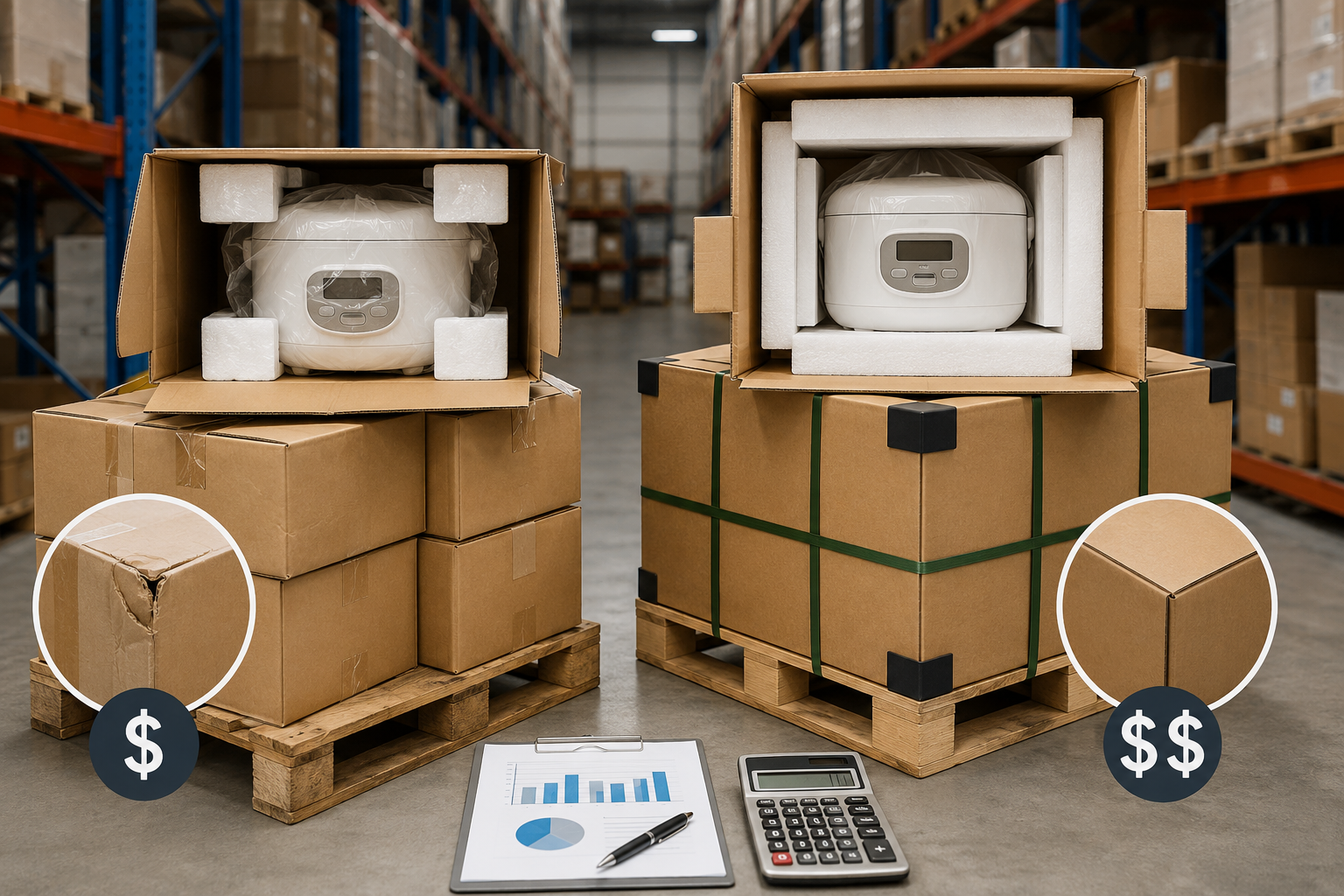
Let me explain the main reasons why packaging costs differ. First, the outer carton strength varies. Some suppliers use three-layer corrugated board with B-flute8, which is lighter and cheaper but less resistant to stacking pressure. Other suppliers use five-layer corrugated board with BC-flute9, which is stronger and more expensive. The cost difference between these two options can be $0.30 to $0.50 per unit, but you cannot see this difference just by looking at the quotation line item.
Second, the inner protection material and thickness vary. Some suppliers use 5mm EPE foam10, which provides basic shock absorption. Other suppliers use 10mm foam or molded pulp trays, which offer better protection but cost more. If the quotation does not specify the foam thickness or material type, you cannot tell whether the packaging is adequate for long-distance shipping.
Third, the color box printing quality differs. Some suppliers use offset printing with CMYK colors11 and glossy coating, which produces sharp images and vibrant colors. Other suppliers use flexographic printing with fewer colors and no coating, which looks duller but costs less. For retail sales, the printing quality affects customer perception and purchase decisions. For wholesale or online sales, simpler printing may be acceptable.
Fourth, some quotations include accessories and compliance materials, while others do not. For example, one supplier may include poly bags, cable ties, and warranty cards in the packaging cost, while another supplier lists these items separately. When you compare quotations, you need to check whether all required items are included or if you need to add them later.
I suggest creating a packaging checklist and asking each supplier to confirm what is included in their quotation. The checklist should cover outer carton grade, inner protection material and thickness, color box printing method, manual page count, label types, and any special requirements like country-specific certifications. Once all suppliers confirm the same checklist, you can compare the packaging costs on an equal basis.
Another reason for cost differences is the supplier's packaging material sourcing and production scale. Larger factories may have better pricing from packaging material suppliers because they order in bulk. Smaller factories may pay more for the same materials and pass that cost to you. However, larger factories may also have higher overhead costs, so size alone does not determine packaging cost.
Some suppliers intentionally quote low packaging costs to make the total product price look more attractive, but then add surcharges later for special requests like custom labels, stronger cartons, or faster delivery. To avoid surprises, ask the supplier to provide a detailed breakdown of the packaging cost and confirm whether any additional charges apply.
How Can You Balance Packaging Cost and Protection Level?
After explaining all these factors, buyers sometimes ask me: "So should I just choose the most expensive packaging to avoid all risks?" Not necessarily. The goal is not to spend the most money, but to match the packaging level to your actual risk exposure and business model. Overpackaging wastes money, but underpackaging increases damage and customer complaints.
The right packaging level balances the upfront packaging cost with the potential cost of damaged goods, customer returns, and brand reputation loss. You should calculate the break-even point where a packaging upgrade costs less than the expected damage reduction benefit.
Let me show you how to calculate this balance. Start with your order quantity and retail price per unit. For example, if you order 5,000 rice cookers and sell them for $30 each, your total retail value is $150,000. Next, estimate the damage rate for different packaging levels. Based on our experience, basic packaging may result in a 3% to 5% damage rate12, mid-level packaging may result in a 1% to 2% damage rate, and high-protection packaging may result in less than 0.5% damage rate.
Now calculate the expected damage cost for each packaging level. With basic packaging at 4% damage rate, you would lose 200 units, which equals $6,000 in retail value. With mid-level packaging at 1.5% damage rate, you would lose 75 units, which equals $2,250. With high-protection packaging at 0.5% damage rate, you would lose 25 units, which equals $750.
Next, compare the extra packaging cost for each level. If basic packaging costs $1.00 per unit, mid-level costs $1.50, and high-protection costs $2.00, the extra cost for mid-level is $2,500 and for high-protection is $5,000. By comparing the damage cost reduction with the extra packaging cost, you can see which option gives you the best value.
In this example, upgrading from basic to mid-level packaging saves you $3,750 ($6,000 minus $2,250 in damage) but costs you only $2,500 extra. The net benefit is $1,250, so the upgrade makes sense. Upgrading from mid-level to high-protection saves you another $1,500 ($2,250 minus $750) but costs you $2,500 more. The net benefit is negative $1,000, so the upgrade may not be worth it unless you priorit
"Latest Supply Chain and Freight Indicators", https://www.bts.gov/freight-indicators. Sea freight transit times vary by route and port, with Asia-to-North America routes typically ranging from 14 to 40+ days depending on origin and destination ports, transshipment requirements, and carrier schedules. Evidence role: general_support; source type: research. Supports: typical duration of sea freight shipping from Asian manufacturing regions to major import destinations. Scope note: The 40-day figure represents an upper range estimate; actual transit times depend on specific routing and may be shorter for direct sailings. ↩
"[PDF] Molded pulp products for sustainable packaging - BioResources", https://bioresources.cnr.ncsu.edu/wp-content/uploads/2022/04/BioRes_17_2_3810_Review_-Debnath_SPH_Molded_Pulp_Sustainable_Packaging_19959.pdf. Molded pulp packaging, manufactured from recycled paper fibers, provides cushioning and product protection through engineered shapes and densities, offering an environmentally sustainable alternative to plastic foam materials while maintaining adequate shock absorption for many applications. Evidence role: general_support; source type: research. Supports: the characteristics and applications of molded pulp as a protective packaging material. Scope note: Molded pulp performance characteristics differ from synthetic foams and may not provide equivalent protection in all applications, particularly for heavy impacts or moisture-sensitive products. ↩
"Latest Supply Chain and Freight Indicators", https://www.bts.gov/freight-indicators. Industry studies indicate that cargo damage rates in international shipping typically range from 1% to 11% depending on packaging quality, handling conditions, and transport mode, with inadequate packaging being a primary contributing factor. Evidence role: statistic; source type: research. Supports: typical range of cargo damage rates in international shipping. Scope note: The 15% figure in the case study exceeds typical industry averages and may reflect particularly poor packaging or handling conditions. ↩
""Relative Humidity Effects on the Compression Strength of ...", https://open.clemson.edu/all_theses/3225/. Corrugated board compression strength decreases significantly with increased moisture content, with studies showing strength reductions of 30-50% when relative humidity exceeds 80%, as moisture weakens the hydrogen bonds in cellulose fibers. Evidence role: mechanism; source type: research. Supports: the effect of humidity and temperature on corrugated board structural performance. ↩
"EU - Labeling/Marking Requirements", https://www.trade.gov/country-commercial-guides/eu-labelingmarking-requirements. The European Union requires CE marking on certain regulated product categories including electrical appliances, while the Packaging and Packaging Waste Directive mandates recycling symbols and material identification on packaging to facilitate waste sorting and recovery. Evidence role: general_support; source type: government. Supports: EU regulatory requirements for product marking and packaging labeling. Scope note: CE marking applies to specific product categories under EU harmonized legislation; not all consumer products require CE marking, though electrical rice cookers would typically fall under the Low Voltage Directive. ↩
"Proposition 65 Warnings Website - Your right to know - CA.gov", https://www.p65warnings.ca.gov/. California's Proposition 65 (Safe Drinking Water and Toxic Enforcement Act) requires businesses to provide warnings before knowingly exposing individuals to chemicals listed as causing cancer or reproductive harm, which may apply to consumer products containing certain materials or coatings. Evidence role: general_support; source type: government. Supports: California's requirement for warnings about chemical exposures on consumer products. Scope note: Warning requirements depend on whether the product contains listed chemicals above safe harbor levels; not all imported products require Proposition 65 warnings. ↩
"Packaging Cost Guide 2026: Prices by Type, Size & Order Volume", https://www.ecopackables.com/blogs/news/how-much-does-packaging-cost?srsltid=AfmBOoorWlZic3NcAK8NDSBHcok3MHa4Jnw3bydl6QkqlmRPr62eaZMp. Industry analyses indicate that retail-ready packaging typically commands a cost premium over basic protective packaging due to enhanced graphics, structural design, and material specifications, with premiums varying based on printing complexity, substrate quality, and finishing requirements. Evidence role: general_support; source type: research. Supports: the cost differential between retail-oriented and basic industrial packaging. Scope note: The 20-40% range is a general estimate; actual cost differences vary significantly based on specific design requirements, production volumes, and material choices. ↩
"[PDF] Specifications for Corrugated Paperboard - National Archives", https://www.archives.gov/files/preservation/storage/pdf/corrugated-board.pdf. B-flute corrugated board has a flute height of approximately 2.5mm with 50 flutes per foot, providing good crush resistance and printability, and is commonly used in single-wall (three-layer) construction for shipping containers requiring moderate stacking strength. Evidence role: definition; source type: encyclopedia. Supports: the standard classification and characteristics of corrugated board flute types. ↩
"Estimation of the Compressive Strength of Corrugated Board Boxes ...", https://pmc.ncbi.nlm.nih.gov/articles/PMC8467740/. Double-wall corrugated board (five-layer construction) provides significantly higher edge crush and compression strength compared to single-wall alternatives, with BC-flute combinations offering enhanced stacking performance for heavy or long-distance shipping applications. Evidence role: general_support; source type: research. Supports: the structural advantages of double-wall corrugated board construction. Scope note: Specific strength improvements vary based on paper grades and manufacturing specifications beyond just the flute configuration. ↩
"Expanded polyethylene - Wikipedia", https://en.wikipedia.org/wiki/Expanded_polyethylene. EPE (Expanded Polyethylene) foam is a closed-cell foam material commonly used in protective packaging due to its shock absorption properties, moisture resistance, and lightweight characteristics, typically available in densities ranging from 20 to 45 kg/m³. Evidence role: definition; source type: encyclopedia. Supports: the material composition and protective properties of EPE foam. ↩
"Flexo vs. Offset Printing (The 3 Main Differences Explained)", https://blog.focuslabel.com/difference-between-offset-and-flexo-printing. Offset lithography typically produces higher resolution and color fidelity than flexographic printing, with better detail reproduction and smoother gradients, though flexographic printing offers advantages in speed and cost-effectiveness for corrugated packaging applications. Evidence role: general_support; source type: research. Supports: the quality differences between offset and flexographic printing for packaging applications. Scope note: Modern flexographic printing technology has narrowed the quality gap, and the practical difference may not be significant for all packaging designs or viewing distances. ↩
"Protective Packaging Material: Cost vs. Protection - York Container", https://www.yorkcontainer.com/york-container-blog/protective-packaging-material-cost. Research on packaging performance indicates that damage rates vary significantly with protection level, with studies showing that enhanced packaging can reduce damage rates from baseline levels of 3-8% to below 1% for properly designed systems, though specific rates depend on product fragility and handling conditions. Evidence role: statistic; source type: research. Supports: the relationship between packaging investment and product damage rates in shipping. Scope note: The cited damage rate ranges are illustrative estimates; actual damage rates depend on numerous factors including product design, handling practices, and transport conditions beyond packaging alone. ↩