Rice Cooker Shipping Documents Checklist: What Do You Really Need Before Your Container Leaves?
You've paid the deposit, chosen your rice cooker models, and confirmed the shipping date. Then your freight forwarder sends you a document request list with 15 items. You panic. Which ones does the supplier provide? Which ones do you handle? Which ones can delay your shipment for weeks if they're wrong?
A rice cooker shipping documents checklist is not a universal template you copy from the internet. It is a pre-shipment risk-control tool that must match your destination market, shipping arrangement, product specifications, and importer requirements. Missing or inconsistent documents can trigger port delays, extra charges, and repeated correction requests.1
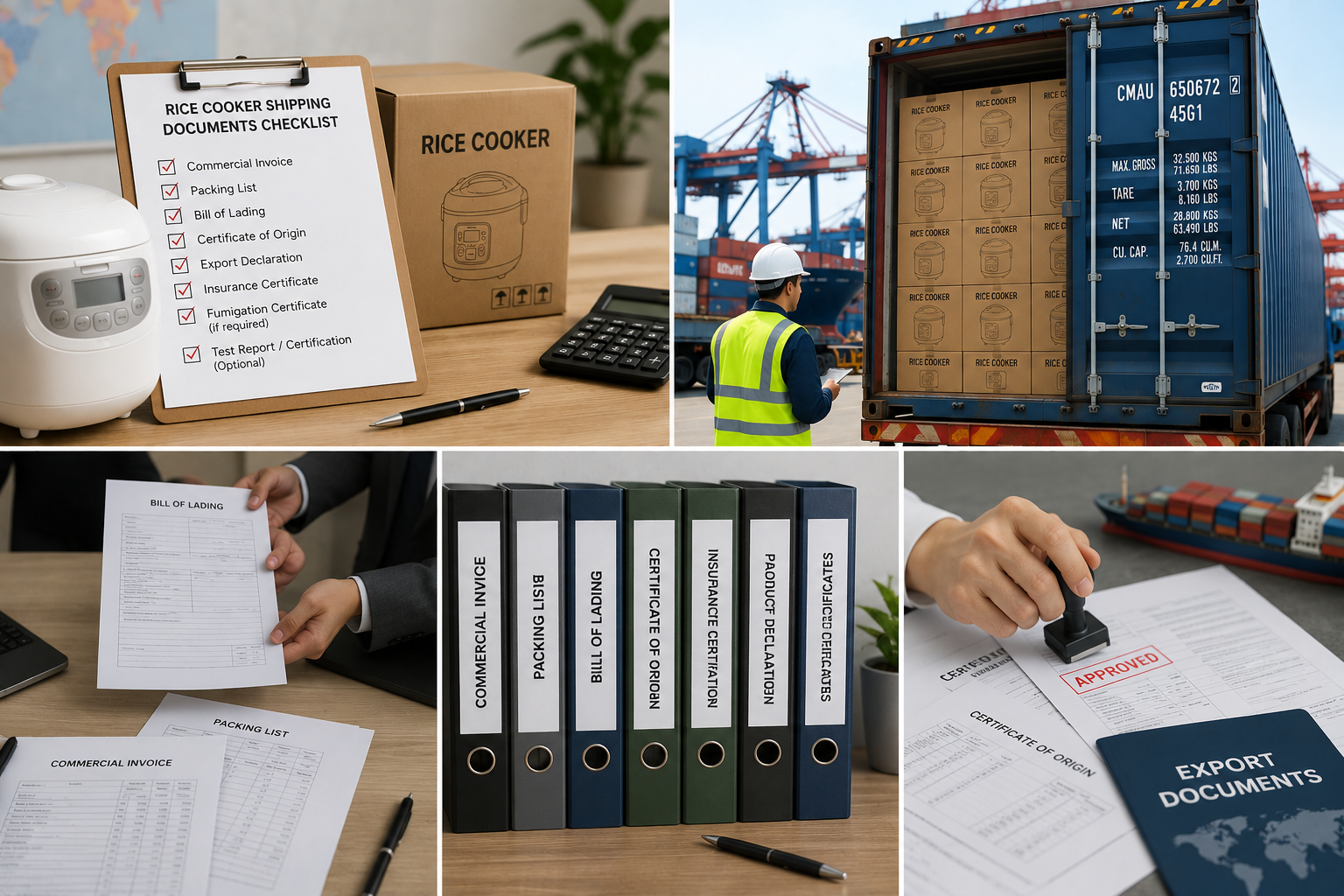
In export order document preparation, I've seen first-time importers treat all documents as one undifferentiated pile. They ask for "all the paperwork" without knowing what each document does or who is responsible for it. This creates confusion, wastes time, and increases risk. Let me walk you through the real structure of a rice cooker shipping documents checklist, based on what we prepare and check before every container leaves our factory.
What Are the Three Document Categories You Must Separate?
Many first-time importers confuse export documents, import clearance documents, and product compliance documents. These three categories serve different purposes, are issued by different parties, and control different risks.
Export/shipping documents are prepared by the supplier or freight forwarder to prove the shipment exists, describe what is being shipped, and transfer ownership. Import clearance documents are prepared or arranged by the importer or customs broker to meet destination-country customs requirements. Product compliance documents prove the rice cookers meet safety, electrical, or quality standards in the destination market.
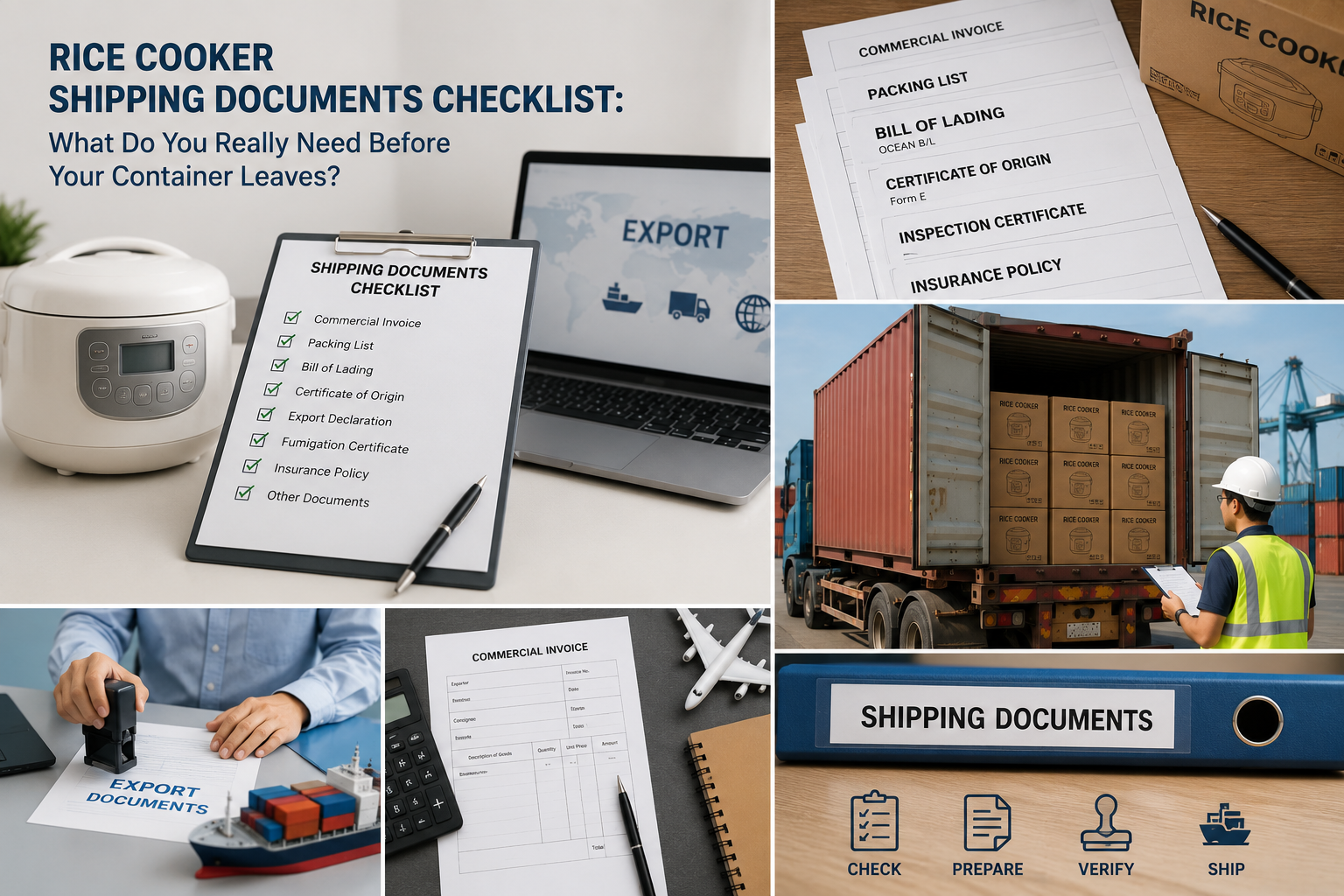
In most of my orders, confusion happens because importers assume the supplier provides everything. We provide export and shipping documents. We support product compliance documents if certifications were done before the order. But we cannot independently issue import clearance documents or guarantee what your destination customs will accept. You must confirm clearance document requirements with your freight forwarder, customs broker, or local authority before the shipment.
The second confusion point is timing. Export documents are prepared before or at the time of shipment. Product compliance documents should be arranged during or before production (not after the container is already at sea).2 Import clearance documents are often prepared after shipment but before arrival, using information from export documents. If you wait until the container arrives to start asking about compliance certificates, you have already lost control of the timeline.
Here is the structure I recommend you follow when building your checklist:
| Document Category | Purpose | Responsible Party | Timing |
|---|---|---|---|
| Export/Shipping Documents | Prove shipment exists, describe goods, transfer ownership | Supplier or freight forwarder | Before or at shipment |
| Import Clearance Documents | Meet destination customs requirements | Importer or customs broker | After shipment, before arrival |
| Product Compliance Documents | Prove product meets destination market standards | Supplier (if arranged before order), importer, or third-party lab | During or before production |
If you organize your checklist using these three categories, you will immediately know who to ask, when to ask, and what risk you are controlling.
What Export and Shipping Documents Does the Supplier Provide?
Export and shipping documents are the supplier's responsibility, but you must check them for consistency before shipment. Inconsistent information across documents is one of the most common risks I see in export order checks.
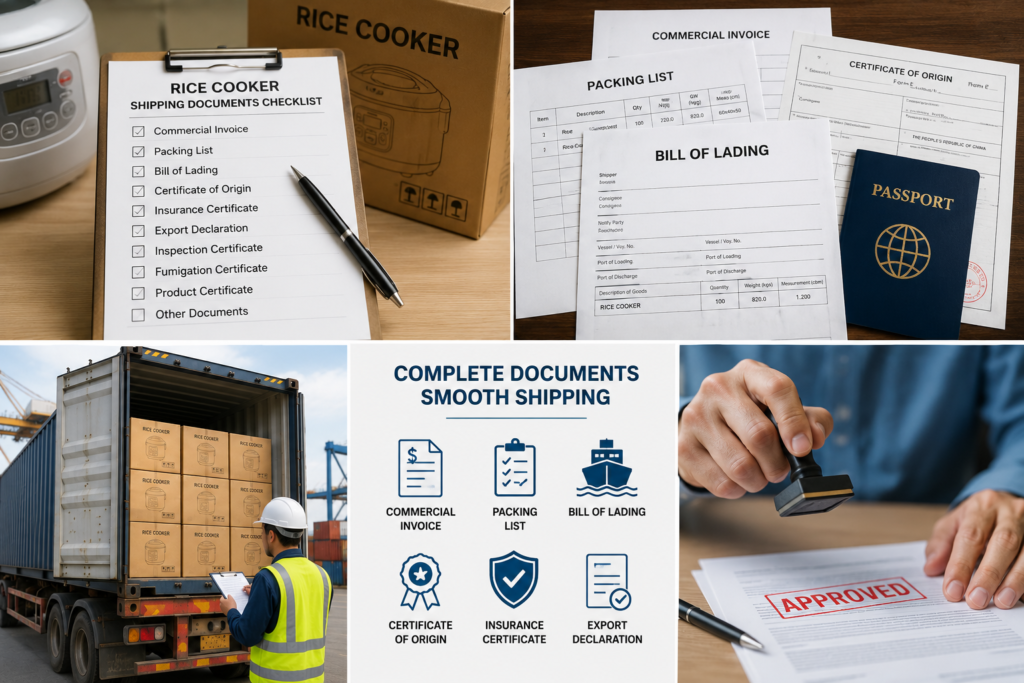
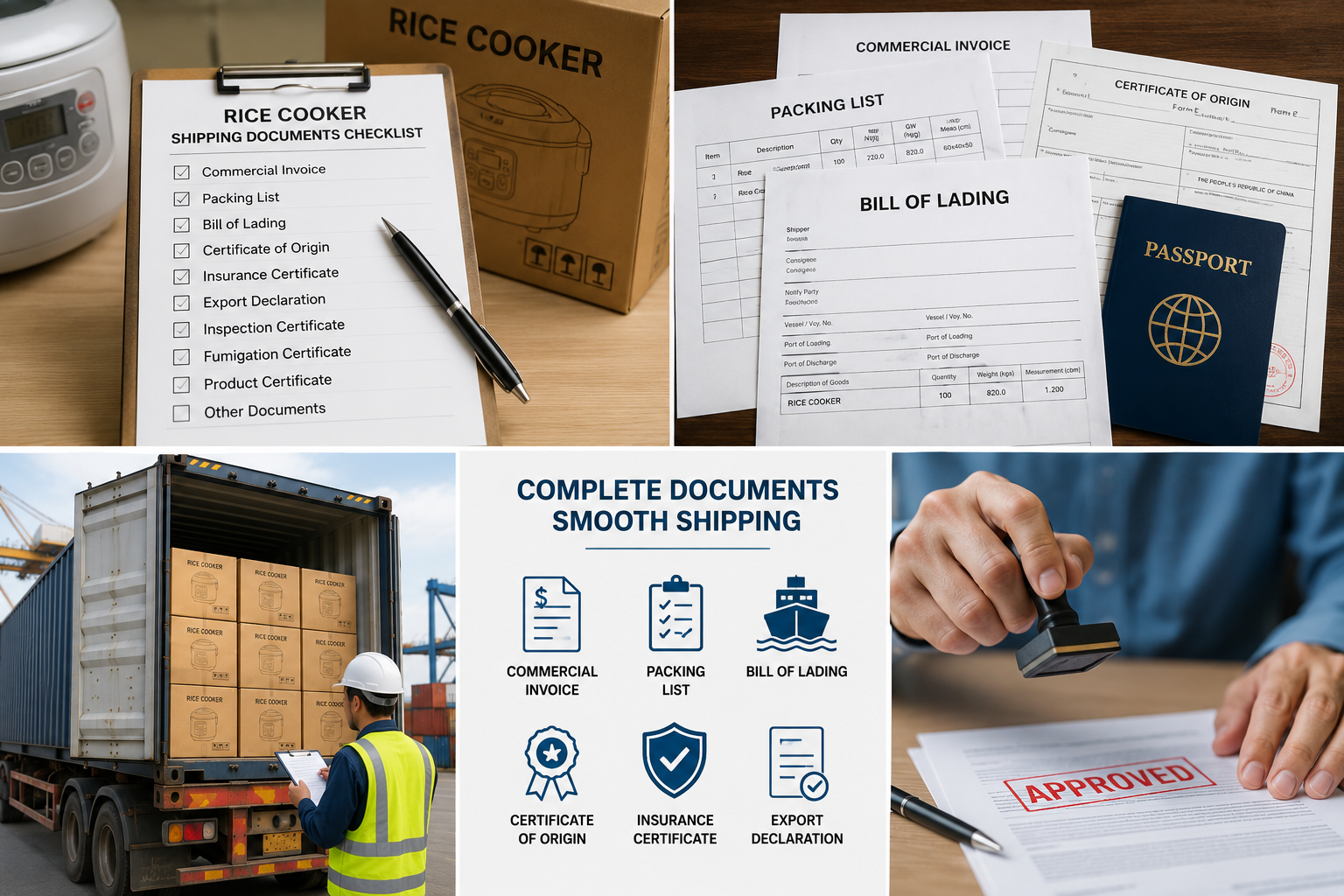
The core export and shipping documents for rice cooker orders are: Commercial Invoice, Packing List, Bill of Lading (or Air Waybill), and Certificate of Origin (if applicable). These documents describe the product, quantity, value, packaging, and shipment routing. Any inconsistency in model number, capacity, voltage, plug type, quantity, weight, or carton details can trigger questions from customs or freight forwarders.
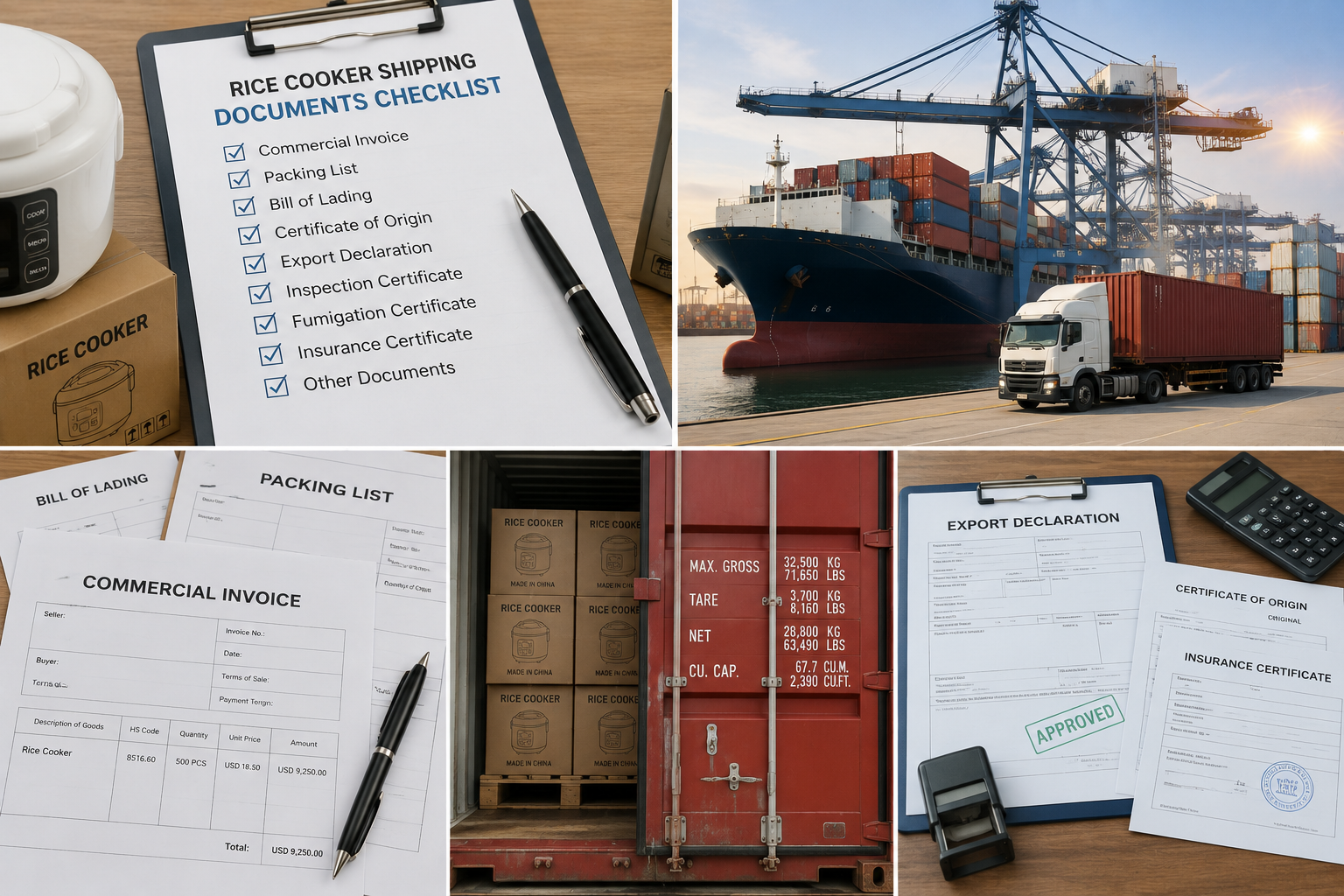
Let me explain what each document does and what consistency risk you should check:
Commercial Invoice: This document states what you bought, the price, the payment terms, and the supplier and buyer information. Customs uses it to calculate duties and taxes.3 The model number, capacity, power rating, voltage, quantity, and unit price on the invoice must match your purchase order and the actual product. In one of my early orders, the buyer's purchase order said "1.8L rice cooker," but our invoice said "1.8 liter rice cooker" in the description field. The customs officer questioned the discrepancy and asked for a correction letter. It was a small wording difference, but it caused a 3-day delay.
Packing List: This document describes how the goods are packed: carton dimensions, quantity per carton, gross weight, net weight, total volume, and total cartons. Freight forwarders use it to arrange container loading. Customs uses it to verify the shipment. The total quantity on the packing list must match the total quantity on the commercial invoice. The carton count and weight must match the actual loaded container. I always recommend importers request a draft packing list before shipment and cross-check it against the product specification sheet and purchase order.
Bill of Lading (B/L) or Air Waybill: This is the contract between the shipper and the carrier. It proves who owns the goods during transit and is required to claim the goods at the destination port. The consignee name, port of discharge, and cargo description on the B/L must match the commercial invoice and packing list. If your freight forwarder issues the B/L, you must check it immediately after receiving it. Corrections after the shipment has departed are expensive and slow.
Certificate of Origin (CO): Some destination countries require a Certificate of Origin to qualify for reduced import duties under trade agreements (such as Form E for ASEAN countries, or GSP Form A for some developing countries). The CO states where the rice cookers were manufactured. It must be issued by an authorized chamber of commerce or trade authority in the supplier's country. Not all orders require a CO; you must confirm with your customs broker or freight forwarder based on your destination country and tariff preference needs.
Here is a consistency check list I use before every shipment:
| Information Field | Must Match Across |
|---|---|
| Model number | Purchase order, commercial invoice, packing list, product label, B/L |
| Capacity (e.g., 1.8L) | Purchase order, commercial invoice, packing list, product specification |
| Voltage and frequency (e.g., 220V 50Hz) | Purchase order, commercial invoice, product label, compliance certificate |
| Plug type (e.g., EU plug, UK plug) | Purchase order, commercial invoice, product label |
| Quantity (total units) | Purchase order, commercial invoice, packing list, B/L |
| Carton count | Packing list, container loading plan, B/L |
| Gross weight and net weight | Packing list, B/L |
| HS code (customs tariff code) | Commercial invoice, CO (if applicable), import declaration |
If any field is inconsistent, I flag it immediately and request correction before the supplier submits documents to the freight forwarder. Fixing inconsistencies after shipment is much harder and more expensive.
What Import Clearance Documents Must You Confirm with Your Customs Broker?
Import clearance documents are not the supplier's responsibility, but the supplier's documents will be used to prepare them. You or your customs broker must confirm what your destination country requires before the shipment arrives.
Common import clearance documents include: Import Declaration (Customs Entry), Commercial Invoice (from supplier), Packing List (from supplier), Bill of Lading or Air Waybill, Certificate of Origin (if required), and any destination-specific permits or licenses. Requirements vary by country, product category, and import value. The importer or customs broker must verify these requirements; the supplier cannot guarantee what will be accepted.
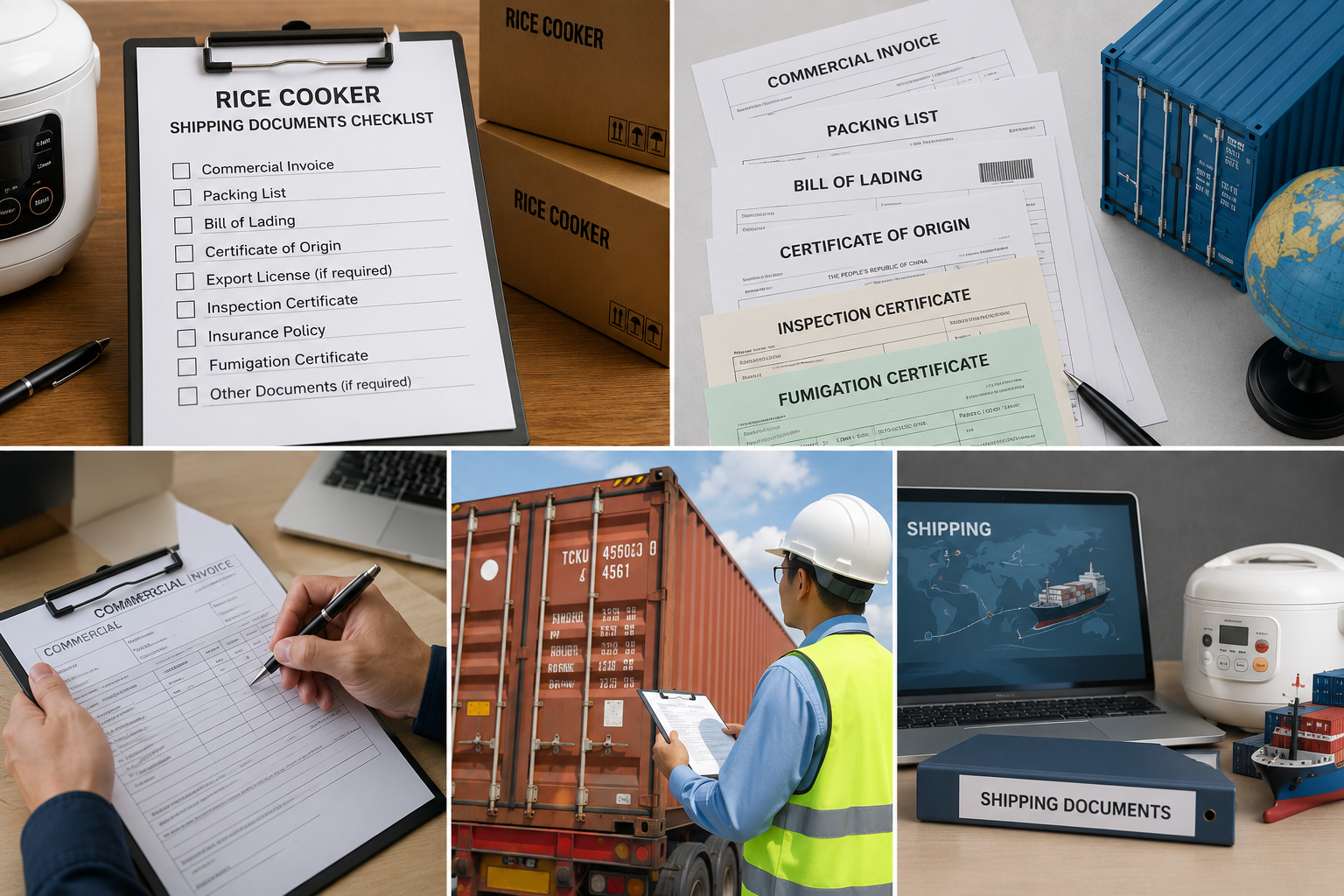
In my experience supporting importers, the biggest mistake is assuming the supplier knows your country's import rules. I know China's export regulations and standard export documents. I do not know whether your country requires an import license for rice cookers, or whether your customs accepts electronic copies of invoices, or whether your port charges extra fees for weekend clearance. You must ask your freight forwarder or customs broker these questions before the container ships.
Some destination countries require additional documents that are not standard export documents. For example, some African countries require a Pre-Shipment Inspection Certificate (such as COTECNA, SGS, or Bureau Veritas inspection)4. Some Middle Eastern countries require a Certificate of Conformity (COC) issued after a third-party inspection. Some countries require translated documents or notarized copies. These requirements are not universal; they are market-specific.
If your destination requires a pre-shipment inspection or certificate of conformity, you must arrange it during production or before shipment. The inspection company will visit the factory, check the products, review documents, and issue a certificate. This process takes time. If you request it after production is finished and the container is already packed, the factory may need to unpack cartons for inspection, which delays shipment and adds cost.
Here is a checklist of questions you should ask your customs broker or freight forwarder before confirming the shipping date:
- Does my destination country require an import license or permit for rice cookers?
- Does my country require a pre-shipment inspection certificate or certificate of conformity?
- Does my country accept electronic copies of commercial invoices and packing lists, or do I need original paper copies?
- Does my country require the Bill of Lading to be consigned to a specific party (e.g., the importer, or "to order")?
- Are there any restricted or prohibited materials, components, or packaging materials for rice cookers in my country?
- What is the correct HS code (tariff code) for my rice cooker model in my country's customs system?
- Are there any seasonal restrictions, port congestion, or holiday closures I should plan around?
If your customs broker cannot answer these questions, find a more experienced broker or contact the customs authority in your country directly.
What Product Compliance Documents Should You Arrange Before Production?
Product compliance documents prove your rice cookers meet the safety, electrical, and quality standards required in your destination market. These documents are not shipping documents, but customs or market authorities may request them during or after clearance.
Common product compliance documents for rice cookers include: Electrical Safety Test Report (such as IEC 603355), EMC Test Report (electromagnetic compatibility)6, Energy Efficiency Label or Certificate (if required), and RoHS or REACH Declaration (for EU markets). These documents must be arranged during or before production, not after the container is already shipped. The supplier can support compliance testing if requested before the order, but final responsibility lies with the importer or brand owner.
In most of my orders, first-time importers either ignore compliance documents or ask for them at the last minute. Compliance testing takes time. A full electrical safety test and EMC test for a new rice cooker model can take 3 to 6 weeks7, depending on the lab and whether the product passes on the first attempt. If you request compliance testing after production is finished, you risk delaying shipment or shipping non-compliant products.
Some destination markets have mandatory compliance requirements that are checked at customs. For example, the European Union requires rice cookers to meet the Low Voltage Directive (LVD) and EMC Directive, and to carry a CE mark8. If your rice cookers do not have the required test reports and Declaration of Conformity, customs may refuse clearance or request proof. Australia and New Zealand require electrical appliances to meet AS/NZS standards and be registered with the national electrical safety regulator before they can be sold9. If you import rice cookers without compliance registration, you cannot legally sell them, even if customs clears the shipment.
Other markets have voluntary or post-clearance compliance requirements. For example, many African and Middle Eastern countries do not check compliance documents at customs, but market surveillance authorities may request proof after the products enter the market. If you cannot provide test reports or certificates, your products may be recalled or banned from sale.
Here is a compliance document checklist I recommend you confirm before placing a rice cooker order:
| Destination Market | Likely Required Compliance Documents | When to Arrange |
|---|---|---|
| European Union | CE mark, LVD test report (IEC 60335), EMC test report, Declaration of Conformity, RoHS/REACH declaration | Before or during production |
| United States | UL or ETL certification (optional but preferred), FCC EMC test (if applicable) | Before or during production |
| Australia/New Zealand | AS/NZS safety test report, electrical safety registration (RCM mark) | Before shipment |
| United Kingdom | UKCA mark, LVD test report, EMC test report, Declaration of Conformity | Before or during production |
| Middle East (Saudi, UAE, etc.) | SASO, ESMA, or other COC certificate, G mark, IEC test reports | Before shipment (pre-shipment inspection) |
| Africa (Kenya, Nigeria, etc.) | COC certificate (SGS, COTECNA, Bureau Veritas), SONCAP (Nigeria), IEC test reports | Before shipment (pre-shipment inspection) |
| Other markets | Confirm with local authorities or customs broker | As early as possible |
If your destination market requires compliance documents, request them from the supplier during the order negotiation stage. Most experienced suppliers have compliance test reports for common markets. If the supplier does not have the required reports for your market, you must arrange third-party testing and certification yourself, or ask the supplier to support it (with cost and time added to the order).
What Consistency Risks Should You Check Before the Container Ships?
Document consistency is the most overlooked risk in rice cooker export orders. Inconsistent information across documents can trigger customs delays, correction requests, extra fees, and even shipment rejection.
The most common consistency risks for rice cooker shipments are: mismatched model numbers, incorrect capacity or power ratings, inconsistent plug types, quantity discrepancies, weight errors, and incorrect HS codes. These inconsistencies happen because different documents are prepared by different people (sales team, production team, shipping team, freight forwarder) without cross-checking. A pre-shipment consistency check reduces these risks.
In export order document checks, I usually first verify that the model number on every document matches the model number on the product label and the purchase order. If the purchase order says "RC-1.8L-EU" but the invoice says "RC-1800-EU," it creates a discrepancy. Even if both refer to the same product, customs or the freight forwarder may question it.
The second check is capacity and power rating. If the packing list says "1.8L rice cooker" but the product label says "1.5L," customs will ask for clarification. If the commercial invoice says "700W" but the compliance certificate says "750W," the importer may be asked to provide proof that the product meets the declared specification.
The third check is plug type. Many rice cooker orders include mixed plug types (for example, 50 units with EU plug and 50 units with UK plug). If the packing list does not clearly separate the two plug types by carton, or if the commercial invoice lists only one plug type, customs may question the shipment. I recommend separating different plug types on separate lines in the packing list and invoice, with clear quantity breakdown.
The fourth check is quantity. The total quantity on the purchase order, commercial invoice, packing list, and Bill of Lading must match exactly. If the packing list says 500 units but the invoice says 495 units, customs will ask why. Even small discrepancies can trigger delays.
The fifth check is weight. The gross weight and net weight on the packing list must match the weight declared on the Bill of Lading. If the packing list says total gross weight is 5,000 kg but the B/L says 5,200 kg, the freight forwarder may re-weigh the cargo and charge a correction fee.
The sixth check is HS code. The HS code (Harmonized System tariff code) on the commercial invoice must match the HS code declared in the import declaration. Rice cookers are usually classified under HS code 8516.60 (electric cooking appliances)10, but some countries have sub-codes for different capacities or features. If you declare the wrong HS code, you may pay incorrect duties, or customs may reclassify the product and charge penalties.
Here is a pre-shipment consistency checklist I use:
- [ ] Model number matches across purchase order, invoice, packing list, product label, and compliance certificate
- [ ] Capacity (e.g., 1.8L) matches across invoice, packing list, product label, and specification sheet
- [ ] Voltage and frequency match across invoice, product label, and compliance certificate
- [ ] Plug type matches across invoice, packing list, and product label; mixed plug types are clearly separated
- [ ] Total quantity matches across purchase order, invoice, packing list, and B/L
- [ ] Carton count matches across packing list and container loading plan
- [ ] Gross weight and net weight match across packing list and B/L
- [
"Trade Guide: Customs Valuation", https://www.trade.gov/trade-guide-customs-valuation. International trade organizations and customs authorities identify documentation errors as a leading cause of clearance delays, with studies showing that incomplete or inconsistent paperwork accounts for a significant portion of port processing delays and generates additional administrative costs for importers. Evidence role: general_support; source type: institution. Supports: Documentation errors and inconsistencies are a recognized cause of customs delays and additional costs in international trade. Scope note: General trade documentation principles rather than rice-cooker-specific data ↩
"Electrical - Training | Occupational Safety and Health Administration", http://www.osha.gov/electrical/training. Quality management frameworks and international trade best practices emphasize that product compliance documentation should be integrated into the production timeline, as post-production testing can reveal non-conformities that require costly rework or shipment delays. Evidence role: general_support; source type: research. Supports: Industry standards recommend arranging compliance testing and certification during the production planning phase. ↩
"Trade Guide: Customs Valuation", https://www.trade.gov/trade-guide-customs-valuation. Under the World Customs Organization's valuation framework and the WTO Customs Valuation Agreement, the transaction value declared on the commercial invoice serves as the basis for calculating import duties and taxes in most jurisdictions. Evidence role: mechanism; source type: institution. Supports: Customs authorities use commercial invoices as the primary document for determining customs value and calculating import duties. ↩
"Pre-Shipment Inspection - District Export Councils", https://erd.export-u.com/articles-2/shipping-logistics/pre-shipment-inspection/. Multiple African nations have implemented pre-shipment inspection and certification of conformity programs, often administered through international inspection companies, as part of their import control and standards enforcement systems to verify that imported goods meet national technical regulations and quality standards before shipment. Evidence role: general_support; source type: institution. Supports: Several African countries operate mandatory pre-shipment inspection and certification programs. Scope note: Specific requirements vary significantly by country and product category ↩
"Appliance Efficiency Regulations - Title 20", https://www.energy.ca.gov/rules-and-regulations/appliance-efficiency-regulations-title-20. The International Electrotechnical Commission's IEC 60335 series establishes safety requirements for household and similar electrical appliances, with IEC 60335-2-15 specifically addressing particular requirements for appliances for heating liquids including rice cookers, covering aspects such as electrical safety, mechanical hazards, and thermal protection. Evidence role: definition; source type: institution. Supports: IEC 60335 is the international safety standard for household electrical appliances. ↩
"Electromagnetic Compatibility in Household Appliances", https://analytical-group.com/en/news-en/electromagnetic-compatibility-in-household-appliances. Electromagnetic compatibility (EMC) testing, governed by standards such as those in the IEC 61000 series, assesses whether electrical equipment generates acceptable levels of electromagnetic emissions and maintains adequate immunity to electromagnetic disturbances, ensuring that appliances can operate in their intended electromagnetic environment without causing interference to other equipment or experiencing malfunction. Evidence role: definition; source type: institution. Supports: Electromagnetic compatibility testing verifies that electrical appliances do not cause or are not affected by electromagnetic interference. ↩
"Electrical Certification FAQs", https://www.dir.ca.gov/dlse/ecu/ecu_faq.htm. Testing laboratories and certification bodies indicate that comprehensive electrical safety testing according to IEC 60335 standards and EMC compliance testing for household appliances generally requires multiple weeks to complete, accounting for test setup, execution, analysis, and potential retesting if initial results show non-conformities. Evidence role: general_support; source type: research. Supports: Electrical safety and EMC testing for household appliances typically requires several weeks. Scope note: Actual duration varies by laboratory capacity, product complexity, and whether retesting is needed ↩
"EU Legislation and CE Marking - International Trade Administration", https://www.trade.gov/country-commercial-guides/eu-eu-legislation-and-ce-marking. Under EU legislation, electrical appliances operating within certain voltage ranges must comply with the Low Voltage Directive (2014/35/EU) for safety requirements and the Electromagnetic Compatibility Directive (2014/30/EU), with manufacturers required to affix CE marking to demonstrate conformity before products can be placed on the EU market. Evidence role: general_support; source type: government. Supports: The EU requires electrical household appliances including rice cookers to comply with safety and electromagnetic compatibility directives. ↩
"Regulatory Compliance Mark - Wikipedia", https://en.wikipedia.org/wiki/Regulatory_Compliance_Mark. Australian and New Zealand electrical safety regulations require that electrical appliances meet applicable AS/NZS safety standards and be registered with the relevant electrical safety regulator, with products required to display the Regulatory Compliance Mark (RCM) before they can be legally supplied or sold in these markets. Evidence role: general_support; source type: government. Supports: Australia and New Zealand have mandatory electrical safety compliance and registration requirements for electrical appliances. ↩
"956227 - CROSS Ruling - U.S. Customs and Border Protection", https://rulings.cbp.gov/ruling/956227. According to the World Customs Organization's Harmonized Commodity Description and Coding System, electric cooking appliances and plate warmers for domestic use are classified under heading 8516, with rice cookers typically falling under subheading 8516.60 covering other ovens and cookers, though specific classification may vary by national tariff schedules. Evidence role: definition; source type: institution. Supports: The Harmonized System classifies electric cooking appliances including rice cookers under heading 8516. Scope note: Countries may have additional subheadings or specific classification rules ↩