How to Avoid Rice Cooker Container Loading Mistakes?
We shipped a 40HQ container1 to a West African client last year. The pre-shipment inspection passed without problems. But when the container arrived, more than 30 cartons at the bottom layer showed serious compression deformation. The buyer claimed that some rice cookers had dented outer shells and refused to accept those units.
Avoiding rice cooker container loading mistakes is not about filling the container to the maximum. It is about balancing loading quantity, carton compression, stacking method, and the product's condition on arrival. Before loading, confirm each model's outer carton size, gross weight, packing quantity, and estimated loading quantity with your supplier. A proper loading plan considers weight distribution and carton pressure, not just empty space.
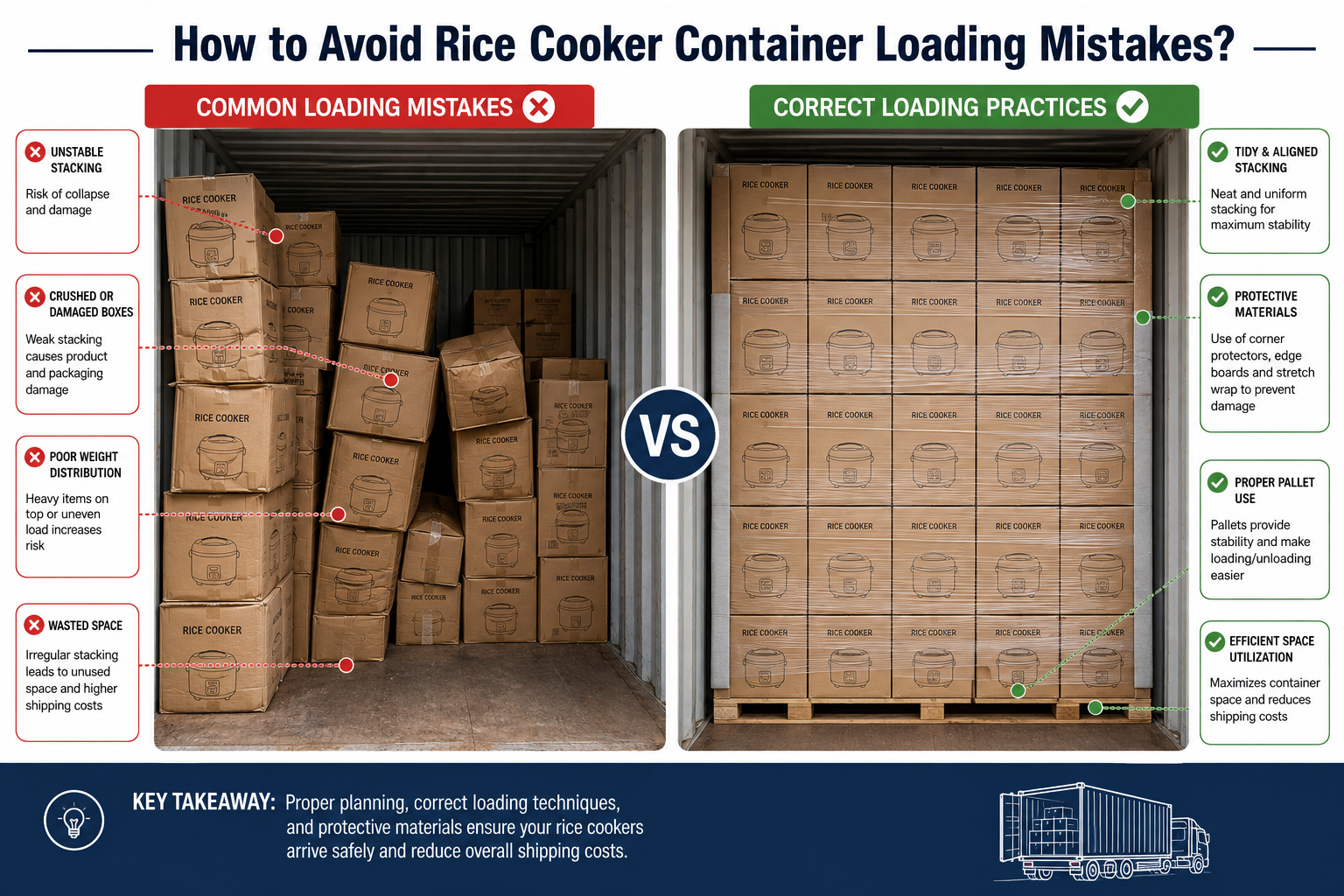
Many importers treat container loading as a simple math problem: divide container volume by carton volume2, then expect that number of cartons to fit. But rice cooker cartons are not rigid blocks. They compress under weight. If you ignore carton strength, stacking limits, and weight distribution, you may pay a lower unit freight cost on paper but face arrival damage, claims, replenishment delays, and disputes that cost far more.
Why do rice cooker shipments suffer damage even after passing inspection?
We often hear buyers say: "The pre-shipment inspection passed, so why did the cartons arrive deformed?" The reason is simple: the inspector checks product quality inside the factory, not the loading process or carton compression during sea transport.
A passed pre-shipment inspection does not guarantee safe arrival. Products may leave the factory in good condition but still suffer carton deformation or damage if the cartons are over-compressed or poorly arranged during loading. The inspection report covers product quality at the factory gate, not the carton's ability to withstand stacking pressure during a three-week ocean voyage.
Rice cooker cartons are usually made from corrugated cardboard with a compression strength rating3. When you stack too many layers or mix heavy models with light models in the same column, the bottom cartons will compress beyond their design limit. During the voyage, vibration, humidity, and temperature changes weaken the carton further4. By the time the container arrives at the destination port, the bottom cartons may look crushed, and the rice cookers inside may have dented lids, scratched surfaces, or damaged control panels.
As a rice cooker factory, we see this pattern repeat: buyers focus on passing the inspection and then assume the loading will be fine. But the inspection happens before loading. The loading process is a separate risk. If the buyer does not confirm loading details with the supplier before the container leaves, they have no control over how the cartons are arranged, how many layers are stacked, or whether the weight is distributed evenly.
The business loss from arrival damage is not just the cost of the damaged units. You also face customer complaints, replacement shipments, reduced trust, and disputes over who is responsible. Some buyers try to claim compensation from the freight forwarder or shipping line, but most ocean freight contracts limit liability to a small amount per kilogram5. The real cost falls on the buyer.
To avoid this, you need to shift your focus from "Did the inspection pass?" to "Will the cartons survive the loading and transport?" That means asking your supplier to share loading details before the container is packed.
What information should you confirm before container loading?
Many buyers wait until the container is already loaded to ask about the final quantity. By then, it is too late to change anything. If the actual loading quantity is lower than expected, your unit freight cost goes up. If the cartons are stacked too high, your arrival damage risk goes up. Both outcomes hurt your business.
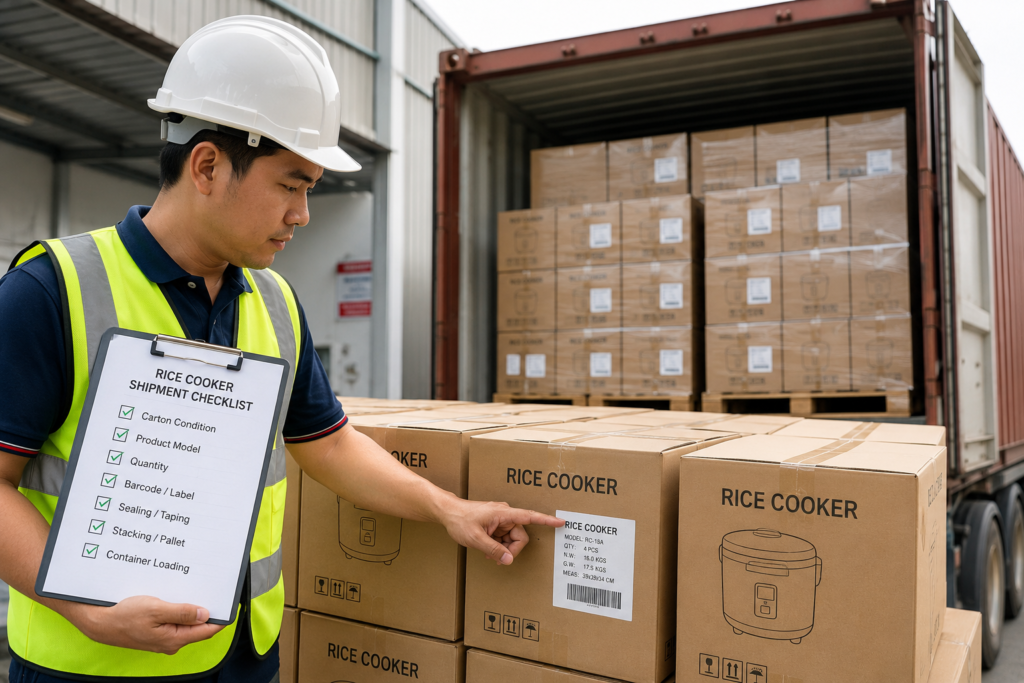
Before loading, buyers should ask the supplier to confirm each model's outer carton size, gross weight, packing quantity, and estimated container loading quantity. These numbers reduce surprises such as fewer cartons loaded than expected and higher unit freight cost. Confirming these details before loading gives you time to adjust the order mix, stacking method, or container type if needed.
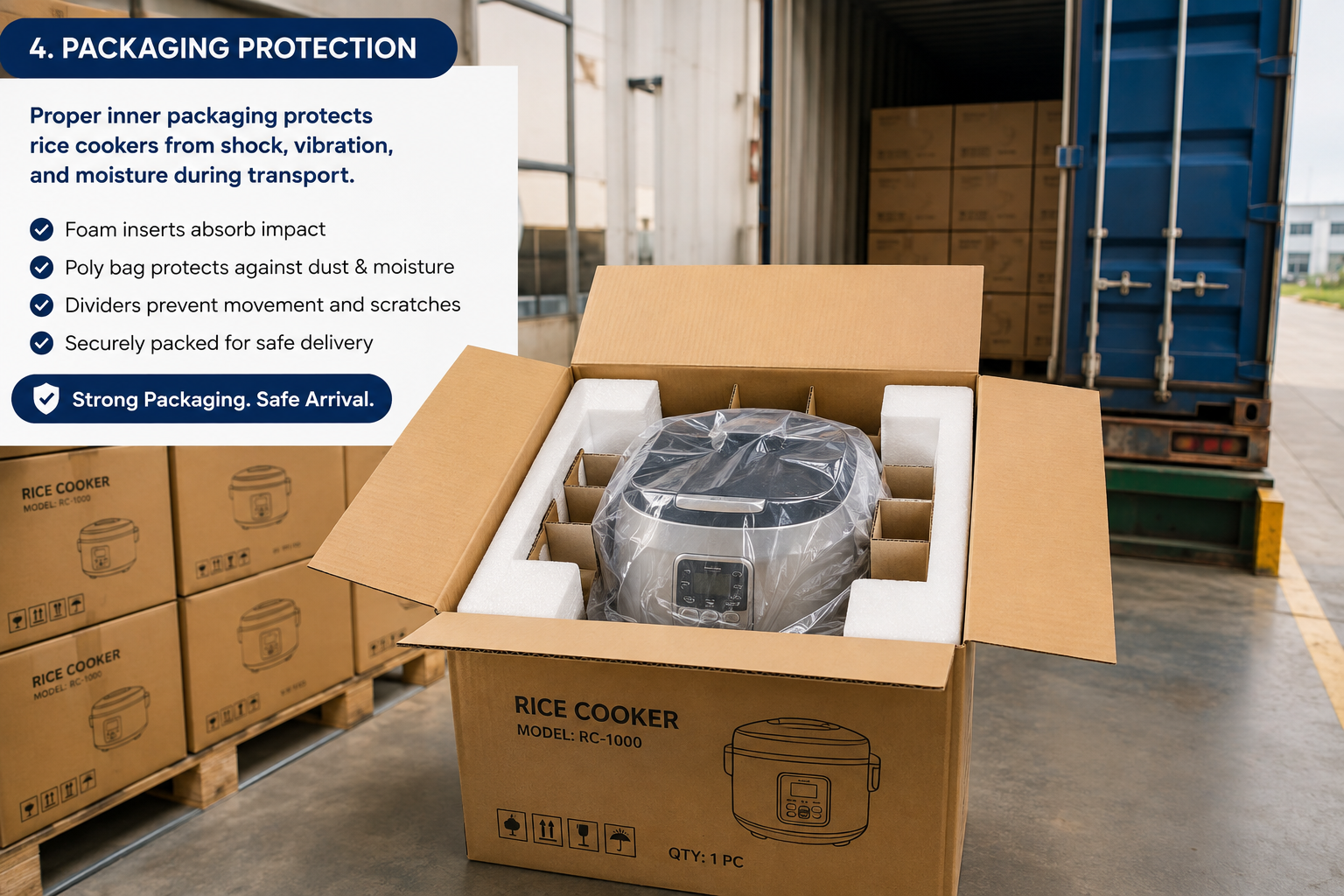
As a rice cooker factory, we usually provide carton dimensions, gross weight, and estimated loading quantity for buyers to confirm before shipment. For example, a 1.8-liter rice cooker may have an outer carton size of 32 cm × 32 cm × 35 cm, a gross weight of 3.5 kg, and an estimated loading quantity of 1,680 units per 40HQ container. A 2.8-liter model may have a larger carton size of 38 cm × 38 cm × 40 cm, a gross weight of 4.8 kg, and an estimated loading quantity of 1,200 units per 40HQ container.
If you order a mix of models, the total loading quantity will depend on how the cartons are arranged. Mixing small and large cartons in the same container can create gaps that reduce the total quantity. Mixing light and heavy models in the same stack can create uneven pressure that increases the risk of bottom-layer compression.
When you confirm these numbers before loading, you can calculate the expected total quantity, the expected unit freight cost, and the expected weight distribution. If the estimated loading quantity is lower than you expected, you can adjust the order mix or split the shipment into two containers. If the gross weight is higher than you expected, you can reduce the stacking layers or request stronger cartons.
Some buyers skip this step because they assume the supplier will load the container correctly. But the supplier's goal is to finish loading and ship on time. The supplier may not know your tolerance for arrival damage or your budget for unit freight cost. If you do not communicate your expectations clearly before loading, you cannot complain about the result afterward.
Here is a simple table showing how carton size and weight affect loading quantity:
| Model | Carton Size (cm) | Gross Weight (kg) | Estimated 40HQ Quantity | Stacking Layers |
|---|---|---|---|---|
| 1.0L | 28×28×30 | 2.8 | 2,100 | 7 |
| 1.8L | 32×32×35 | 3.5 | 1,680 | 6 |
| 2.8L | 38×38×40 | 4.8 | 1,200 | 5 |
| 5.0L | 45×45×48 | 7.2 | 720 | 4 |
The stacking layers column shows the maximum safe layers based on carton compression strength and gross weight. If you try to stack more layers to fit more units, the bottom cartons will compress and the products inside may suffer damage.
How does over-packing create more problems than it solves?
Some buyers push suppliers to load as many cartons as possible into each container. They believe this will lower the unit freight cost and maximize efficiency. But over-packing often creates the opposite result: higher damage rates, more claims, and higher total cost.
The loading plan should consider weight distribution and carton pressure, not just empty space. Over-packing a container may save apparent space but can create arrival damage, claims, replenishment pressure, and disputes. A container that arrives with 5% damaged units costs more than a container that carries 5% fewer units but arrives intact.
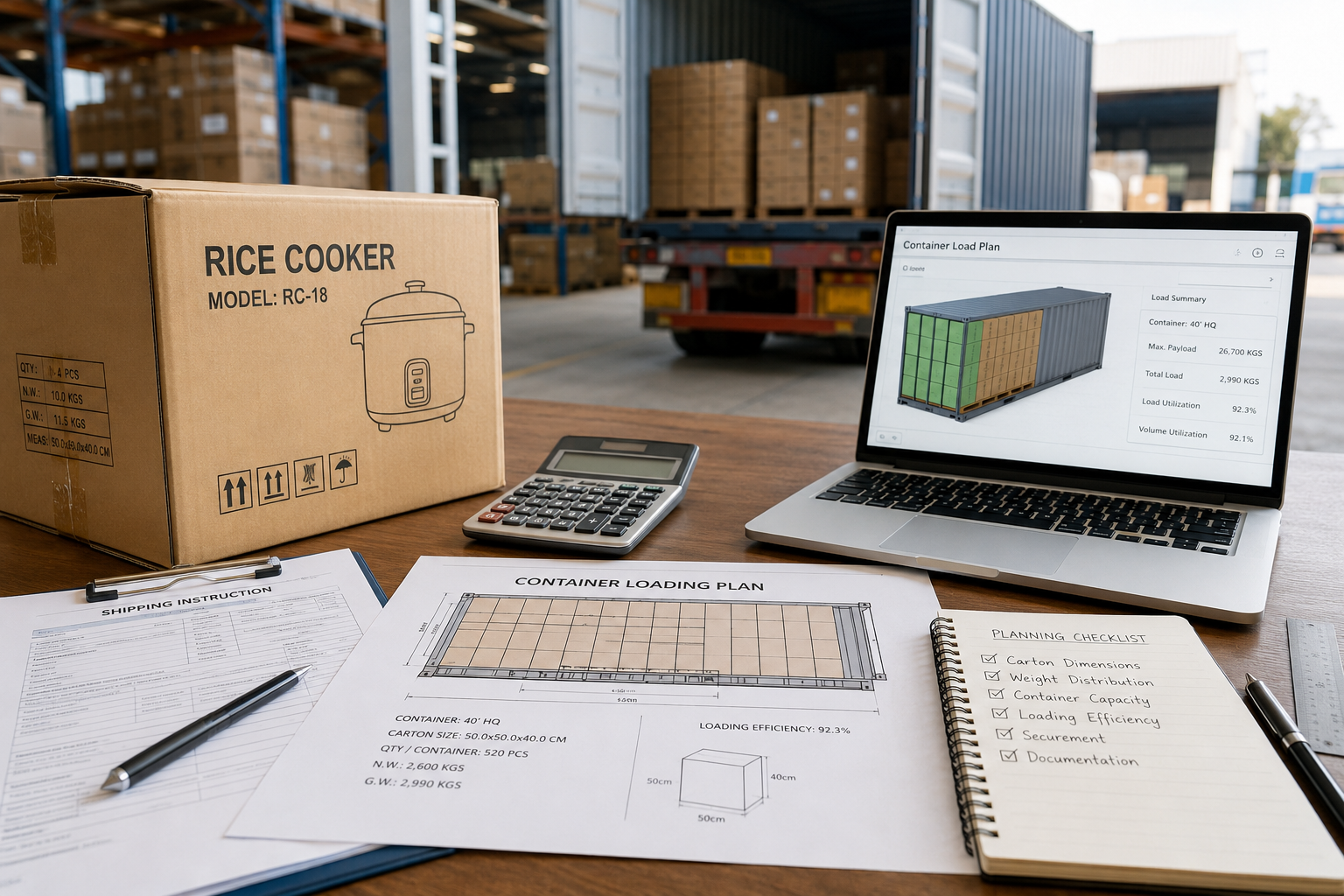
The biggest mistake buyers make is treating container loading as a pure quantity problem. They calculate the container's internal volume, divide by the carton volume, and expect that many cartons to fit. But this approach ignores three critical factors: carton compression limits, weight distribution rules, and the physical difficulty of loading the last few cartons.
Carton compression limits depend on the cardboard thickness, flute type6, and gross weight. Most rice cooker cartons can safely support 4 to 6 layers7, depending on the model size. If you stack 8 or 9 layers to fill the container height, the bottom cartons will start to bulge outward. During transport, the vibration and movement will worsen the compression. By the time the container arrives, the bottom layer may be crushed.
Weight distribution rules require heavier cartons to be placed at the bottom and lighter cartons on top. If you mix heavy 5-liter models with light 1-liter models in the same stack, the weight will not distribute evenly. The heavy cartons will press harder on the cartons below them, creating localized compression. Some cartons will compress more than others, and the entire stack may become unstable.
The physical difficulty of loading the last few cartons is often underestimated. When the container is almost full, the loading workers have limited space to move. They may need to force cartons into gaps or tilt cartons at an angle to fit them in. This creates additional pressure on the carton edges and corners. These cartons are more likely to show damage on arrival.
As a rice cooker factory, we have seen buyers request loading quantities that exceed our recommended limits. For example, a buyer may ask us to load 1,900 units of a 1.8-liter model into a 40HQ container, even though our recommended limit is 1,680 units. To fit the extra 220 units, the loading workers must stack 7 or 8 layers instead of 6, and force cartons into every available gap. The container may close successfully, but the damage rate on arrival will be much higher.
The business loss from over-packing is not just the damaged units. You also face delays in sorting out the damaged stock, repackaging undamaged units, filing claims, and arranging replacement shipments. Your customers may lose confidence in your quality control. Your cash flow suffers because you cannot sell the damaged units at full price.
A better approach is to load the container at 90% to 95% of the theoretical maximum quantity8. This gives the cartons enough space to absorb minor vibration and movement during transport. It also gives the loading workers enough room to arrange the cartons properly without forcing them into place. The small reduction in quantity per container is far cheaper than the cost of arrival damage.
What loading details should you discuss with your supplier?
Most buyers send a purchase order to the supplier and then wait for the shipment notification. They do not discuss the loading plan until the container is already on the way. By then, any problems have already happened.
Importers should compare the expected loading quantity with real carton size, gross weight, stacking limits, and whether the loading plan can be executed safely. This comparison should happen before the container is booked, not after it is loaded. Early communication gives both sides time to adjust the plan and avoid surprises.
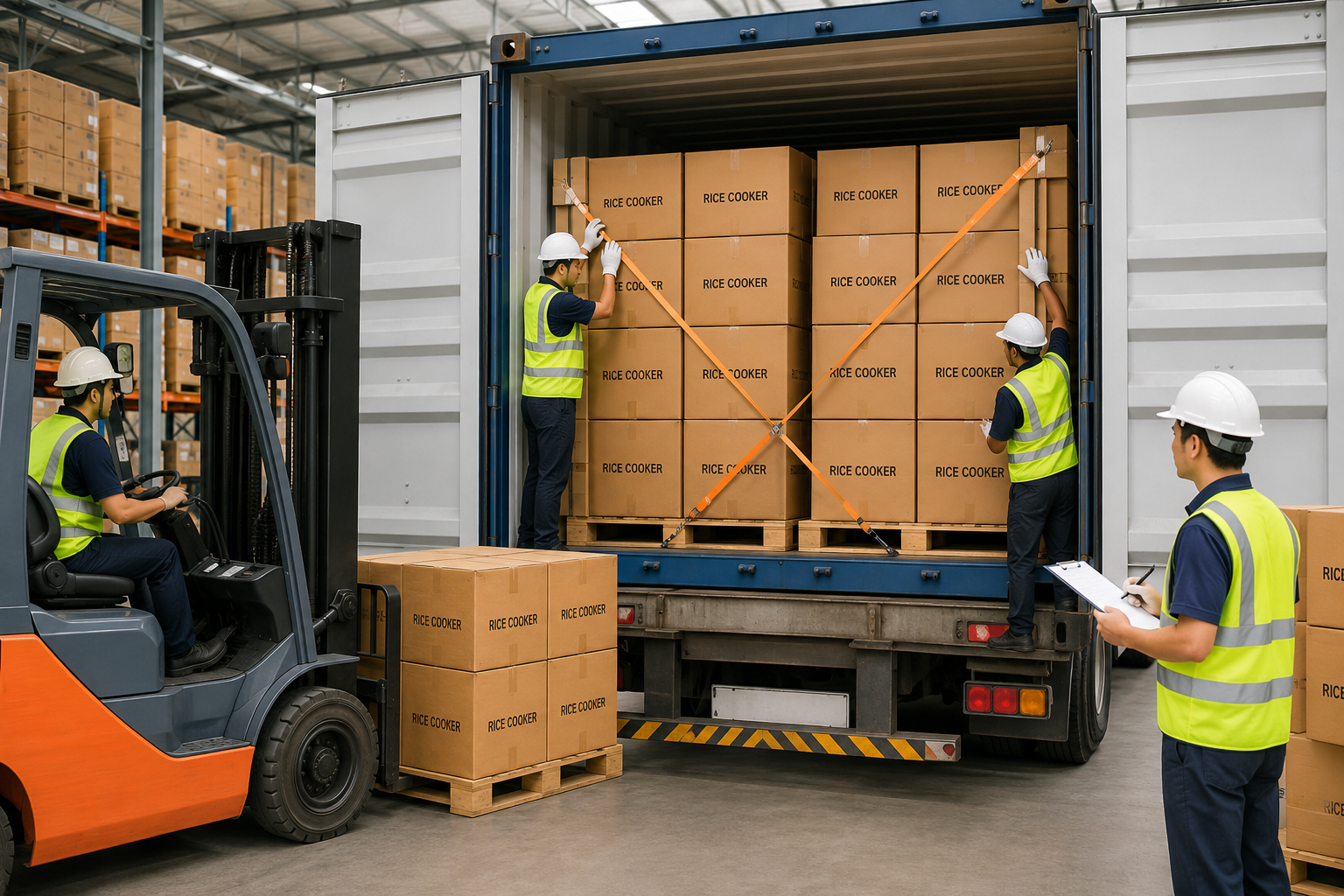
As a rice cooker factory, we recommend buyers ask us the following questions before the container is booked:
- What is the outer carton size for each model in my order?
- What is the gross weight for each model?
- How many units of each model can fit in one carton?
- What is the estimated total loading quantity for my order mix?
- How many stacking layers will you use for each model?
- Will you load all models in separate areas or mix them in the same area?
- Will you place heavier models at the bottom and lighter models on top?
- Do you recommend any changes to my order mix to improve the loading efficiency or reduce the damage risk?
These questions help you understand the loading plan before it is executed. If the estimated loading quantity is lower than you expected, you can adjust the order mix or add more units of high-demand models. If the stacking layers exceed the safe limit, you can request fewer layers or split the shipment into two containers. If the supplier plans to mix heavy and light models in the same stack, you can request separate stacking areas.
Some suppliers may resist sharing these details because they see it as extra work. But a professional supplier understands that clear communication before loading reduces disputes after arrival. If a supplier refuses to answer these questions, it may indicate weak loading experience or poor communication habits. You may want to reconsider whether this supplier is the right partner for your business.
Another useful practice is to request loading photos. Ask the supplier to take photos of the container during loading and after loading is complete. The photos should show the carton arrangement, stacking layers, and any gaps between cartons. These photos help you verify that the loading plan was executed as discussed. If a problem occurs during transport, the photos provide evidence of the carton condition before shipment.
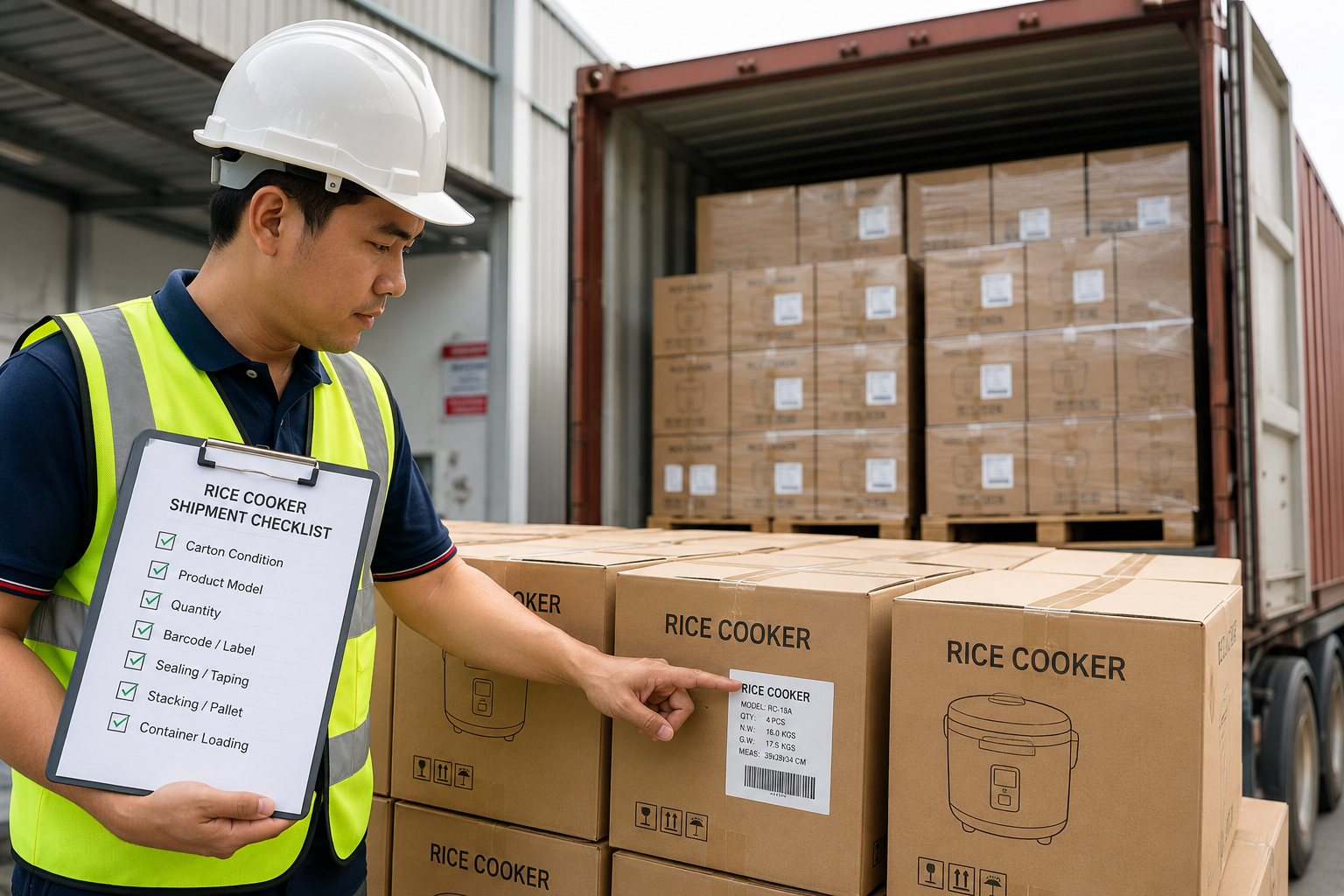
Here is a simple checklist you can use before every shipment:
| Loading Detail | Confirmed? | Notes |
|---|---|---|
| Outer carton size for each model | ☐ | Record in cm (L×W×H) |
| Gross weight for each model | ☐ | Record in kg |
| Packing quantity per carton | ☐ | Record units per carton |
| Estimated total loading quantity | ☐ | Compare with your order |
| Maximum stacking layers | ☐ | Confirm does not exceed carton limit |
| Stacking method (separate or mixed) | ☐ | Discuss with supplier |
| Weight distribution plan | ☐ | Heavy at bottom, light on top |
| Loading photos requested | ☐ | Before, during, and after loading |
This checklist takes only a few minutes to complete, but it can save you thousands of dollars in arrival damage and claims.
How do you balance loading quantity and transport safety?
The core challenge in rice cooker container loading is balancing two competing goals: maximizing the number of units per container and minimizing the risk of arrival damage. If you focus only on quantity, you will over-pack the container and increase the damage risk. If you focus only on safety, you may load too few units and increase the unit freight cost.
The best loading plan is not the one that fits the most cartons. It is the one that delivers the most sellable units to your warehouse. A container that arrives with 1,650 intact units is more valuable than a container that carries 1,800 units but delivers only 1,700 sellable units due to damage9.
As a rice cooker factory, we use a simple guideline: load the container at 90% to 95% of the theoretical maximum quantity based on carton volume. This leaves a small buffer for carton compression, minor measurement variations, and loading worker movement. The buffer does not waste much space, but it significantly reduces the risk of forced loading and over-compression.
For example, if the theoretical maximum for a 1.8-liter model is 1,800 units, we recommend loading 1,620 to 1,710 units. The 90 to 180 unit reduction represents a 5% to 10% safety margin. This margin costs you a small amount of extra freight per unit, but it protects the entire shipment from damage.
Another important factor is the voyage duration and route. A shipment from China to West Africa may take three to four weeks and pass through multiple climate zones10. The cartons will experience high humidity in tropical areas and temperature swings when crossing the equator11. These conditions weaken the carton structure over time. A loading plan that works for a one-week voyage to Southeast Asia may not work for a four-week voyage to West Africa.
If your shipment involves a long voyage or multiple transshipments, you should request stronger cartons or reduce the stacking layers. Stronger cartons cost a bit more, but they provide better protection. Reducing the stacking layers lowers the total quantity per container, but it also lowers the damage risk. The trade-off is worth it if your market has low tolerance for damaged goods or if your competitors offer better product condition.
You should also consider the destination port's handling conditions. Some ports have modern container terminals with careful handling. Other ports have older equipment and rougher handling. If your shipment is going to a port with rough handling, you should build extra safety margin into the loading plan. Ask your supplier about the typical damage rates for shipments to that port. If the damage rate is high, adjust the stacking method or carton strength accordingly.
Finally, remember that the loading plan is not set in stone. If your supplier contacts you during loading and says the estimated quantity cannot be achieved due to carton size variations, listen to the explanation. Do not insist on loading more units if the supplier warns that it will cause compression. A professional supplier will not refuse to load extra units without a good reason. If the supplier is warning you about a problem, take the warning seriously.
Conclusion
Avoiding rice cooker container loading mistakes requires clear communication with your supplier before the container is packed. Confirm carton size, gross weight, stacking limits, and estimated loading quantity. Balance the quantity goal with the safety goal, and remember that a container full of intact units is more valuable than a container with more units but higher damage.
"ISO 668 - Wikipedia", https://en.wikipedia.org/wiki/ISO_668. A 40HQ (40-foot high cube) container is an ISO-standardized shipping container with internal dimensions of approximately 12.03m length × 2.35m width × 2.69m height, providing about 76 cubic meters of cargo space, roughly 1 foot taller than standard 40-foot containers. Evidence role: definition; source type: institution. Supports: the standard specifications of a 40HQ (40-foot high cube) container. ↩
"Stowage factor - Wikipedia", https://en.wikipedia.org/wiki/Stowage_factor. Container loading research demonstrates that simple volume division typically overestimates actual capacity by 15-30% because it ignores void spaces created by carton dimensions not perfectly matching container dimensions, stacking constraints, weight distribution requirements, and the need for load securing. Evidence role: mechanism; source type: research. Supports: why simple volume division does not accurately predict container loading capacity. Scope note: Actual utilization depends on carton dimensions, stacking patterns, and whether mixed cargo is loaded ↩
"Estimation of the Compressive Strength of Corrugated Board Boxes ...", https://pmc.ncbi.nlm.nih.gov/articles/PMC8467740/. Corrugated cardboard compression strength is typically measured using standardized tests such as the Box Compression Test (BCT) and Edge Crush Test (ECT), which determine the load-bearing capacity of cartons under stacking conditions. Evidence role: mechanism; source type: research. Supports: how corrugated cardboard compression strength is measured and rated. Scope note: Standards vary by region and industry; specific ratings depend on board grade and construction ↩
""Relative Humidity Effects on the Compression Strength of ...", https://open.clemson.edu/all_theses/3225/. Research on packaging materials demonstrates that elevated humidity can reduce corrugated cardboard compression strength by 50% or more, while temperature fluctuations and vibration accelerate material fatigue during transport. Evidence role: mechanism; source type: paper. Supports: how humidity and temperature affect corrugated cardboard structural integrity. Scope note: Degradation rates vary with specific board composition, coating treatments, and exposure duration ↩
"[PDF] CARGO LIABILITY STUDY - ROSA P", https://rosap.ntl.bts.gov/view/dot/15740/dot_15740_DS1.pdf. Under international maritime conventions such as the Hague-Visby Rules, carrier liability for cargo damage is typically limited to approximately 2-3 SDR (Special Drawing Rights) per kilogram unless higher value is declared and additional freight paid. Evidence role: general_support; source type: institution. Supports: the legal framework limiting carrier liability in ocean freight. Scope note: Actual limits depend on the applicable convention, bill of lading terms, and whether the shipper declared higher value ↩
"Optimal Design of Double-Walled Corrugated Board Packaging - PMC", https://pmc.ncbi.nlm.nih.gov/articles/PMC8950760/. Corrugated board flute types (A, B, C, E, F) refer to the wave pattern of the corrugated medium, with different flute sizes providing varying combinations of cushioning, stacking strength, and printability; for example, C-flute (approximately 4mm thick) offers good stacking strength for shipping cartons. Evidence role: definition; source type: encyclopedia. Supports: what flute types are and how they affect corrugated board properties. ↩
"Reevaluating safety margins in corrugated board packaging", https://bioresources.cnr.ncsu.edu/resources/reevaluating-safety-margins-in-corrugated-board-packaging/. Packaging engineering guidelines recommend that stacking height be determined by dividing the carton's compression strength by the total load (carton weight plus contents), then applying a safety factor of 3-5 to account for transport conditions and storage duration. Evidence role: general_support; source type: research. Supports: how safe stacking heights are determined for corrugated cartons. Scope note: Optimal stacking layers depend on specific carton construction, gross weight, storage duration, and environmental conditions ↩
"A decision model on the repair and maintenance of shipping ... - PMC", https://pmc.ncbi.nlm.nih.gov/articles/PMC7581502/. Logistics research suggests that optimal container utilization typically ranges from 85-95% of theoretical capacity, as this balance maximizes freight efficiency while providing sufficient space for proper weight distribution, load securing, and minimizing compression damage to stacked cargo. Evidence role: general_support; source type: research. Supports: recommended container utilization rates that balance efficiency with cargo protection. Scope note: Optimal utilization varies with cargo type, fragility, packaging strength, voyage duration, and handling conditions ↩
"Latest Supply Chain and Freight Indicators", https://www.bts.gov/freight-indicators. Supply chain research indicates that cargo damage costs typically include not only the direct product loss but also additional expenses for sorting, repackaging, claims processing, and customer relationship impacts, often totaling 3-5 times the product value, making damage prevention more cost-effective than maximizing container utilization. Evidence role: general_support; source type: research. Supports: the economic impact of cargo damage versus freight optimization. Scope note: Actual cost-benefit analysis depends on product value, damage rates, market conditions, and customer tolerance for defects ↩
"Instant Freight Transit Time Calculator | Air, Ocean & Trucking", https://www.freightos.com/freight-resources/transit-time-calculator/. Ocean freight from major Chinese ports to West African destinations typically requires 25-35 days of sea transit, with variations depending on specific port pairs, transshipment requirements, and shipping line schedules. Evidence role: general_support; source type: other. Supports: typical ocean freight transit times from China to West African ports. Scope note: Actual transit times vary with route, weather, port congestion, and whether direct or transshipment service is used ↩
"[PDF] thermal design of shipping containers - USDA ARS", https://www.ars.usda.gov/ARSUserFiles/30200525/396thermaldesignofshippingcontainersforbeneficialinsects.pdf. Studies of container shipping conditions show that non-refrigerated containers can experience internal temperature variations of 30-40°C during voyages crossing multiple climate zones, with particularly high temperatures and humidity in equatorial regions potentially causing condensation and material degradation. Evidence role: general_support; source type: research. Supports: temperature variations experienced by containers during ocean voyages across climate zones. Scope note: Actual conditions vary with season, container color, cargo type, ventilation, and specific route ↩