Rice Cooker Sea Freight Guide for Importers: What Really Affects Your Shipping Cost?
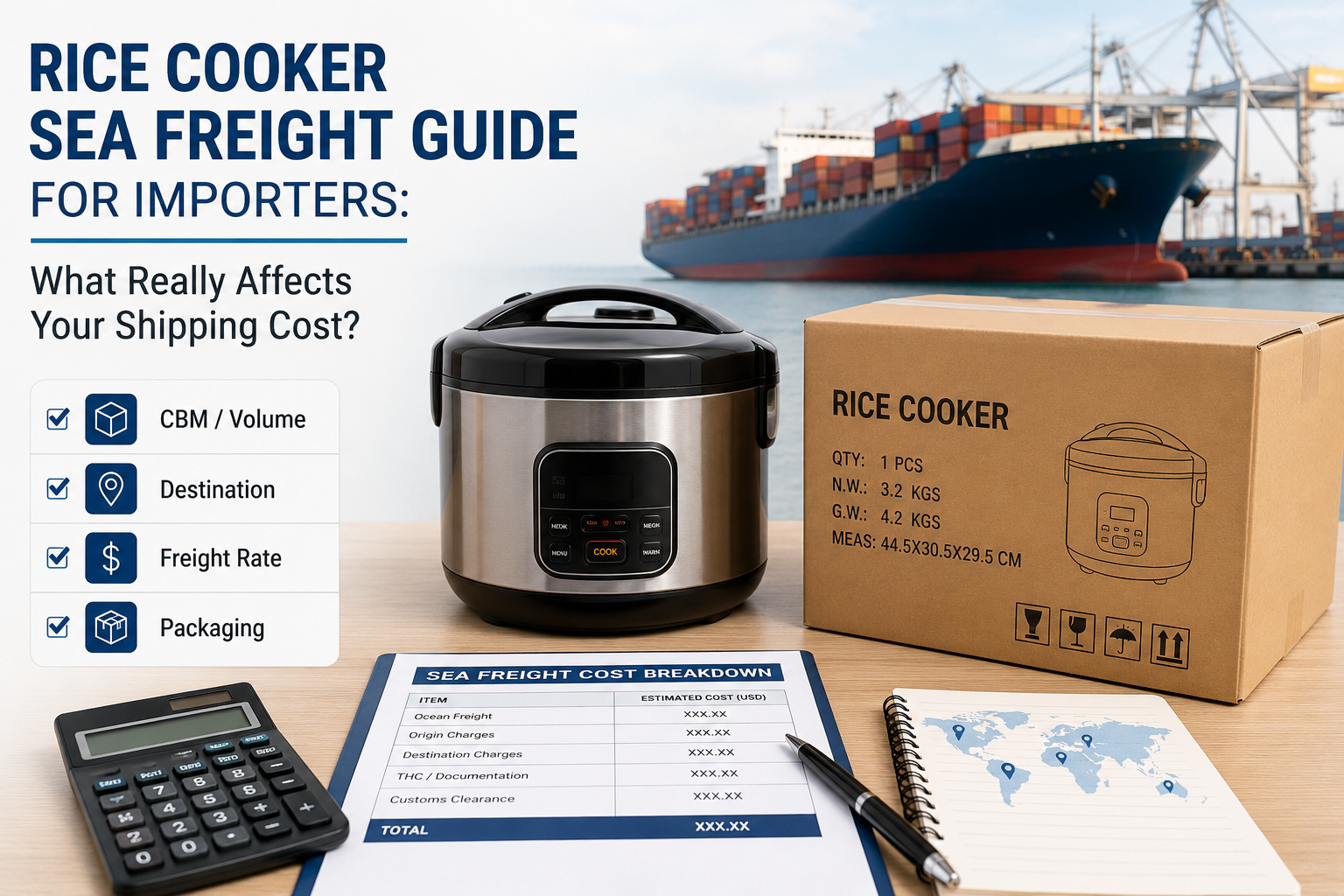
When first-time importers reach out to us about rice cooker orders, sea freight cost is often their first question. Many assume it's a simple per-unit charge. But it's not. The reality is more layered, and understanding it helps you plan better.
Sea freight for rice cookers isn't calculated per unit—it's shaped by your full order profile: carton dimensions, total quantity, model mix, destination port, trade terms, and shipment timing. To get an accurate quote, you need to provide complete order and logistics details, not just the product quantity.
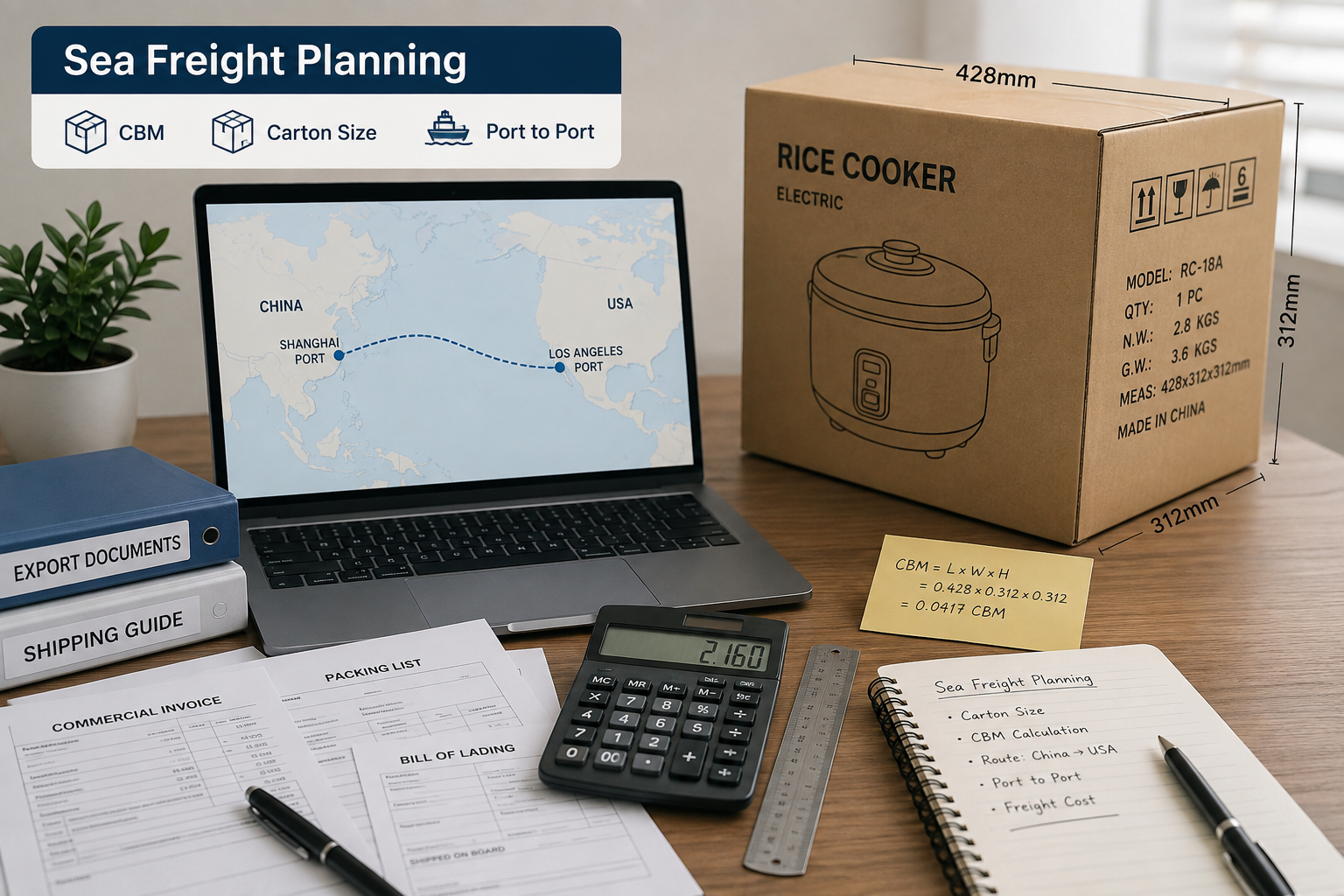
This matters because miscalculating sea freight leads to budget overruns, delayed shipments, or wrong landed-cost projections. When we work with new buyers, we explain what information we need upfront—and why. This article breaks down the key factors that affect your rice cooker sea freight cost and timing, so you can request better quotes and avoid shipment surprises.
Why Can't You Just Tell Me the Sea Freight Cost Per Rice Cooker?
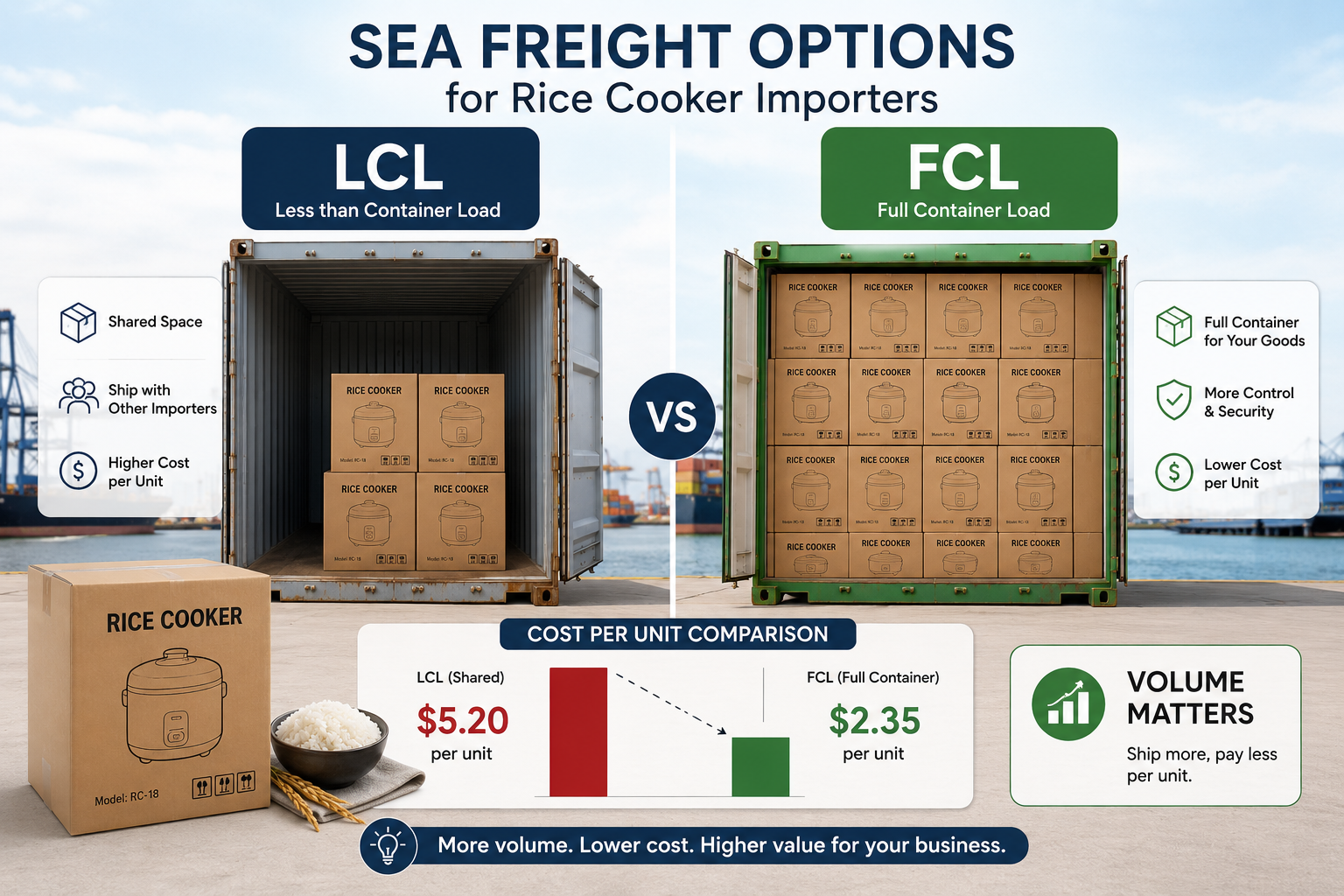
Many buyers expect a flat rate per unit. It sounds simple. But rice cooker shipments don't work that way. Sea freight is calculated based on container space and weight, not individual products.
Sea freight is charged per container (or cubic meter for LCL)1, and the final cost depends on how many cartons fit inside, how heavy they are, which port you're shipping to, and what trade terms you've agreed on. A single rice cooker's "share" of that cost varies with every order.
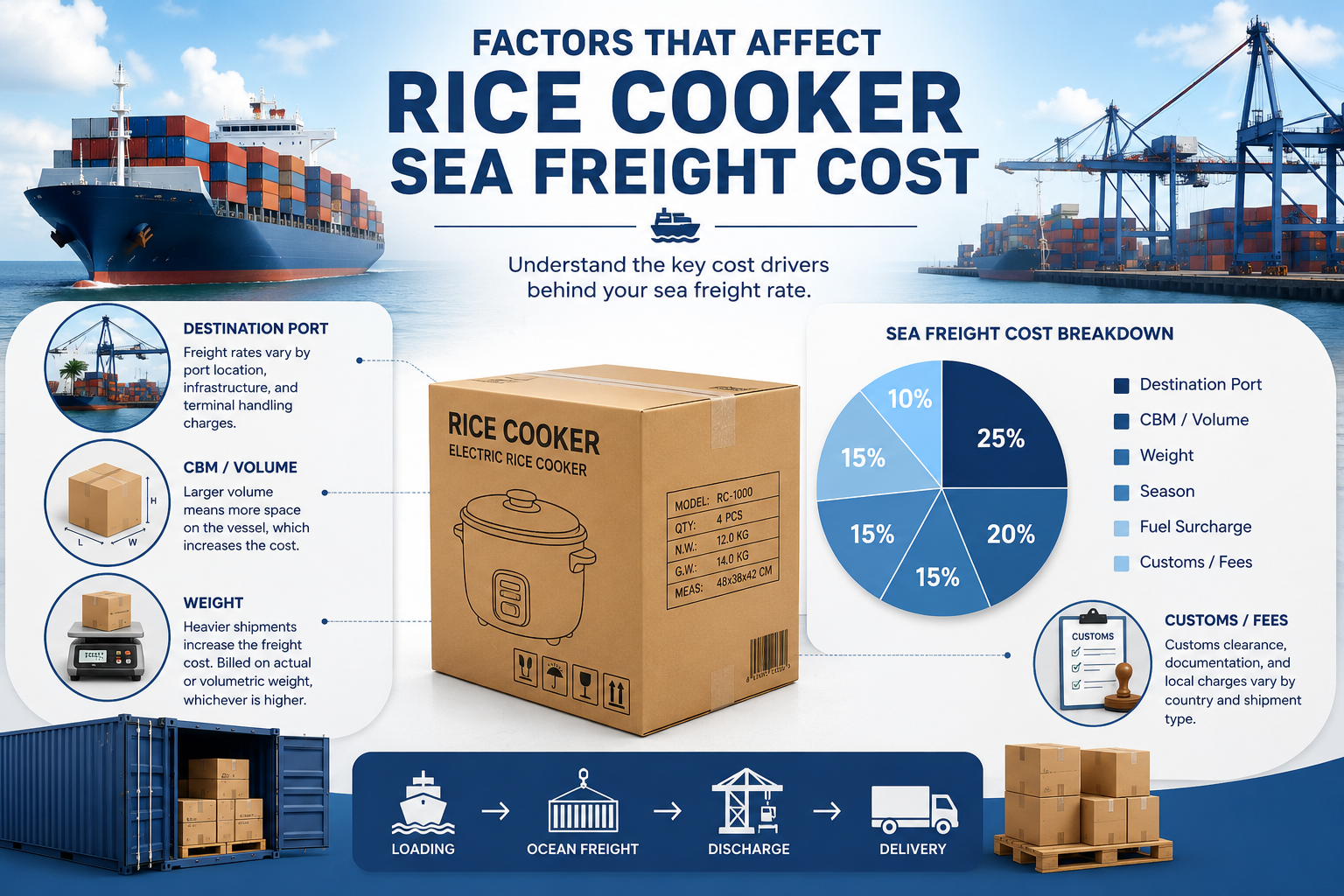
When we prepare a shipment quote, we calculate based on your full order. Here's what we need to know:
- Order quantity and model mix: Are you ordering 500 units of one model, or 200 units across three models? Each model may have different carton sizes and weights.
- Carton dimensions and gross weight: A 3L rice cooker in a compact carton loads differently than a 10L multi-function model in a large box. Carton size affects how many units fit per container layer and per full container.
- Destination port: Freight from Shenzhen to Lagos is priced differently than to Santos or Karachi. Port congestion, vessel routes, and carrier competition all affect rates.
- Trade terms (Incoterms): Are you buying FOB, CIF, or DDU? This determines who arranges and pays for freight, insurance, and destination charges.
- Shipment timing: Freight rates fluctuate. Peak season (before holidays or harvest festivals) costs more than low season. Vessel space may be tight during certain months.
Without this information, any sea freight "estimate" is just a guess. When buyers ask us for a per-unit freight cost before providing order details, we explain that we need the full picture first. This protects both sides from cost misunderstandings later.
| Factor | Why It Affects Sea Freight Cost |
|---|---|
| Order quantity | Determines if you ship FCL or LCL; FCL is usually cheaper per unit for larger orders |
| Carton size | Affects container utilization; oversized cartons waste space and increase cost |
| Gross weight | Heavy shipments may trigger weight-based charges or require special handling |
| Destination port | Different ports have different base rates, surcharges, and transit times |
| Trade terms | FOB, CIF, and DDU shift cost responsibility and affect your total landed cost |
| Shipment timing | Freight rates change monthly; booking early or during low season saves money |
How Do Rice Cooker Carton Dimensions and Packing Affect Freight Cost?
Rice cookers are not uniform cargo. A 1.8L budget model in a thin carton is different from a 5L IH model with heating plates, LCD panel, and thick foam padding. Carton size and packing method directly affect how many units fit per container—and therefore your per-unit freight cost.
Carton dimensions determine container loading efficiency. If your cartons are oversized or poorly designed for stacking, you'll fit fewer units per container, and your per-unit freight cost will rise. Compact, standardized cartons reduce wasted space and lower shipping costs.
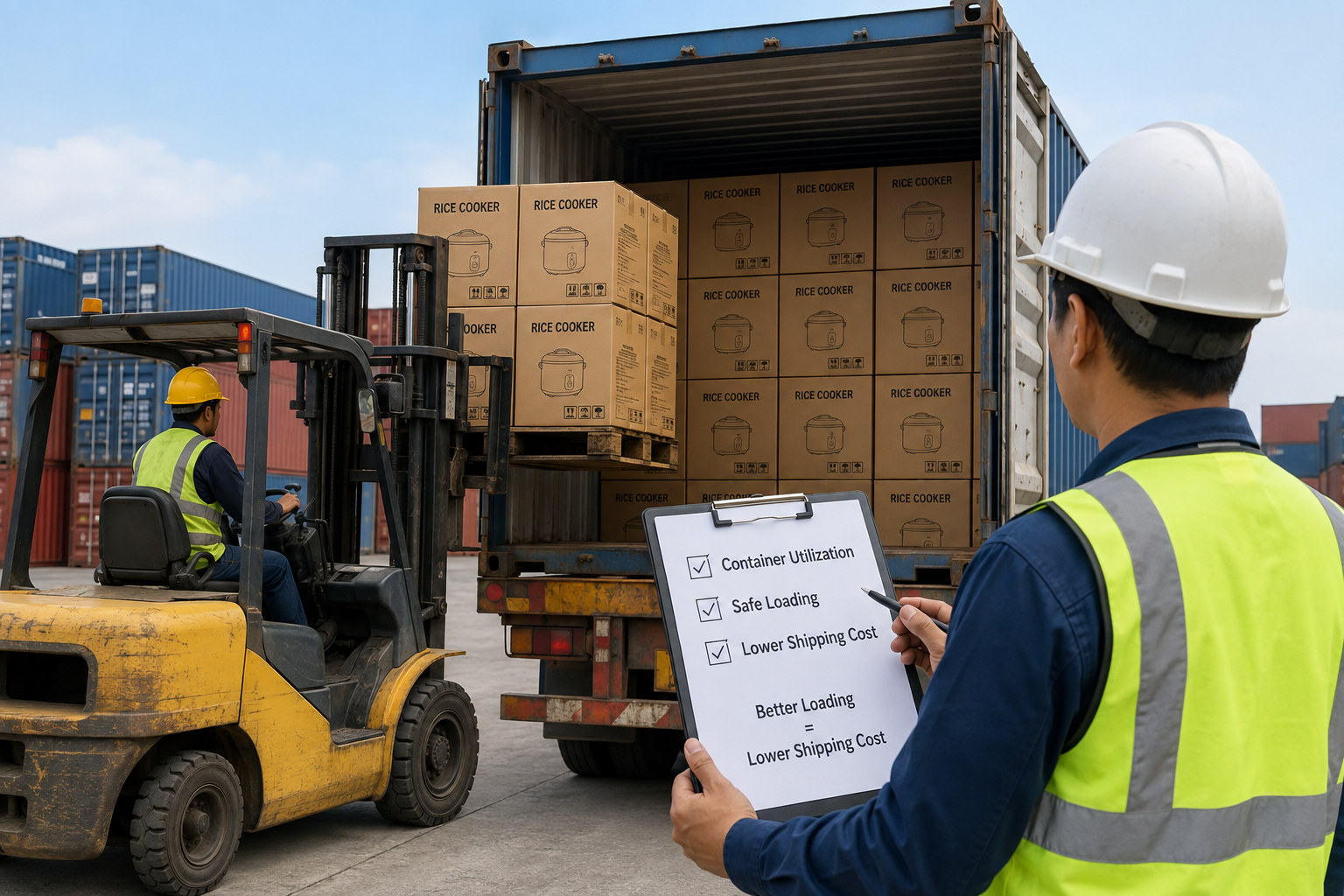
When we design packaging for export orders, we calculate how many cartons fit inside a 20-foot or 40-foot container. Standard container interior dimensions are roughly:
- 20-foot container: 5.90m (L) × 2.35m (W) × 2.39m (H)
- 40-foot container: 12.03m (L) × 2.35m (W) × 2.39m (H)
- 40-foot high cube: 12.03m (L) × 2.35m (W) × 2.69m (H)
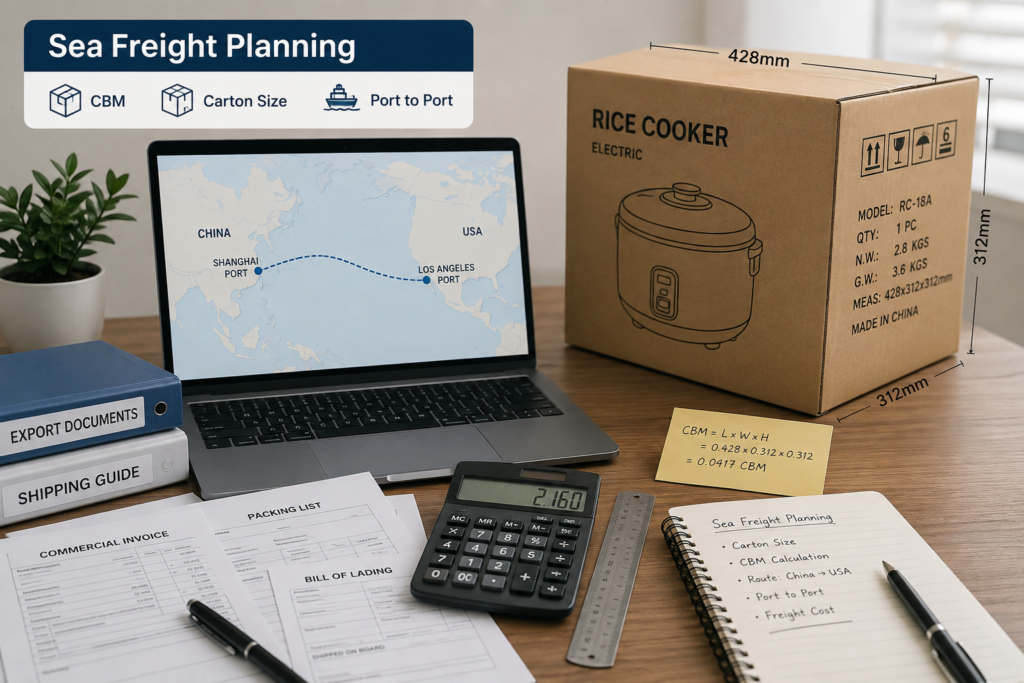
If your rice cooker carton is 42cm × 38cm × 30cm, we calculate how many layers and rows fit along the container's length, width, and height. Wasted space—like a 5cm gap because the carton doesn't align with container dimensions—means fewer units per shipment and higher per-unit cost.
We also consider carton strength. Weak outer boxes collapse under stacking pressure, which limits how high we can stack. If your cartons only support 3 layers instead of 5, you lose 40% of vertical space. That's why we use double-wall corrugated boxes with corner supports for heavier models.
Mixed-model orders add complexity. If you order 200 units of Model A (small carton) and 300 units of Model B (large carton), we need to calculate the best loading plan. Sometimes mixing models reduces overall container efficiency because cartons don't nest well together. In those cases, we may recommend ordering in multiples that optimize container space.
| Carton Factor | Impact on Freight Cost |
|---|---|
| Carton dimensions | Non-standard sizes waste container space and reduce units per load |
| Gross weight per carton | Heavy cartons may require reinforced packing or trigger weight surcharges |
| Carton strength | Weak boxes limit stacking height and reduce loading efficiency |
| Model mix | Mixed carton sizes reduce nesting efficiency and may require multiple loading plans |
| Units per carton | Packing 4 units per carton vs. 2 units per carton changes total carton count and handling |
What Role Does Destination Port and Trade Terms Play in Sea Freight Cost?
Not all ports are priced equally. Sea freight from our factory in Guangdong to Lagos costs differently than to Mombasa, Colombo, or Callao. Port location, carrier competition, port infrastructure, and regional demand all affect base freight rates and surcharges.
Destination port determines the base freight rate, applicable surcharges (like port congestion fees or security charges), and available vessel schedules. Trade terms (Incoterms) define who arranges freight and which costs you're responsible for, directly affecting your total landed cost.
When you request a quote, we ask: Which port will you clear the goods? Some buyers name a city, but cities may be served by multiple ports. For example, Lagos has Apapa Port and Tin Can Island Port. Dhaka is served by Chittagong Port. Knowing the exact port helps us provide accurate quotes and avoid cost surprises.
Trade terms define responsibility boundaries. Here's what the most common terms mean for rice cooker shipments:
- FOB (Free on Board)2: We deliver goods to the vessel at the loading port (usually Shenzhen or Guangzhou). You arrange and pay for sea freight, insurance, and all destination charges. This gives you more control over freight forwarders and carrier selection.
- CIF (Cost, Insurance, Freight)3: We arrange and pay for sea freight and minimum insurance to your destination port. You handle customs clearance and inland delivery. This is common for buyers who want a simpler initial quote but still control destination logistics.
- DDU (Delivered Duty Unpaid): We deliver goods to your warehouse or address, handling freight, insurance, and destination delivery. You pay import duties and taxes. This is less common for rice cookers but useful if you lack logistics experience.
Trade terms affect not just who pays, but also who controls timing and service quality. If you choose FOB, you can negotiate directly with freight forwarders and potentially get better rates—but you also take on more responsibility for booking, documentation, and problem-solving if delays occur.
We also explain that freight rates fluctuate. A quote given in January may not apply in June. Peak season (usually Q3 and Q4 before year-end holidays) sees higher rates and tighter vessel space4. Buyers who place orders early and book space in advance get better rates and more predictable schedules.
| Port Factor | Why It Affects Cost and Timing |
|---|---|
| Destination port location | Remote or less-serviced ports have higher base rates and fewer carrier options |
| Port congestion | Delays at destination ports may trigger demurrage charges or storage fees |
| Trade terms (Incoterms) | FOB, CIF, and DDU shift cost responsibility and control over freight arrangements |
| Peak vs. low season | Freight rates rise during peak shipping periods; booking early reduces cost |
| Carrier availability | Major ports have more carriers and competitive rates; smaller ports have fewer options |
How Does Shipment Timing Affect Your Rice Cooker Order Delivery?
Many first-time buyers assume that once they confirm an order, the goods ship immediately. That's rarely the case. Shipment timing involves production lead time, inspection, balance payment, freight booking, and vessel schedule alignment. Misunderstanding this leads to missed delivery windows or unexpected delays.
Shipment timing is not just about sea transit days—it includes production time, pre-shipment preparation, freight booking, and vessel departure schedule. To avoid delays, confirm the full timeline upfront, including when production starts, when balance payment is due, and when the vessel sails.
When we receive an order, here's the typical timeline we explain to buyers:
- Production lead time: For standard models, production takes 15–25 days after deposit payment. For custom models (different voltage, plug type, or branding), add 5–10 days for mold adjustment or component sourcing.
- Pre-shipment inspection: If the buyer requests third-party inspection (like SGS or Bureau Veritas), schedule it 3–5 days before the planned shipment date. Inspection delays push back the entire schedule.
- Balance payment and document preparation: Most orders require balance payment before shipment. Once we receive payment confirmation, we prepare commercial invoice, packing list, and other export documents. This takes 1–2 days.
- Freight booking and container loading: We book vessel space with the freight forwarder, usually 5–7 days before the vessel sails. Container loading happens 1–2 days before cutoff time.
- Vessel departure and transit time: Once the vessel sails, transit time depends on the route. Shenzhen to Lagos takes roughly 25–30 days5. Shenzhen to Santos takes 35–40 days6. Shenzhen to Karachi takes 15–20 days7.
If any step is delayed—late balance payment, inspection rescheduling, or tight vessel space during peak season—the entire timeline shifts. We've seen buyers miss their target market window (like Ramadan or Christmas seasons) because they didn't account for the full timeline.
We also explain that vessel schedules are not always weekly. Some routes have vessels every 7 days; others every 14 days. If you miss a vessel cutoff, you may wait another two weeks. This is why we ask buyers to confirm their target delivery date early, so we can work backward and set a realistic production and shipment plan.
| Timing Factor | Impact on Delivery |
|---|---|
| Production lead time | Standard models: 15–25 days; custom models: 20–35 days |
| Pre-shipment inspection | Adds 3–5 days; delays if inspection is rescheduled |
| Balance payment timing | Late payment delays document preparation and freight booking |
| Vessel schedule frequency | Missing a cutoff may mean waiting 7–14 days for the next vessel |
| Peak season congestion | Longer booking lead times and potential vessel delays |
What Product Compliance and Documentation Do You Need Before Shipment?
Rice cookers are electrical appliances, so product compliance matters8. Before shipping, you need to confirm that the product meets your destination market's safety, voltage, plug, labeling, and certification requirements. Missing any of these can cause customs delays, rejection, or fines.
Compliance preparation includes confirming voltage and frequency, plug type, certification marks, label language, and user manual language. These details must be finalized before production starts, not after the goods are ready to ship. Verify destination-specific customs and tax rules with your freight forwarder or local import agent.
When we start a new order, we ask buyers about their market's technical requirements:
- Voltage and frequency: Is your market 110V/60Hz (like in parts of Latin America) or 220V/50Hz (like in Africa and Asia)? We adjust the heating element and circuit design accordingly.
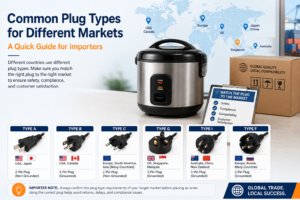
- Plug type: Different countries use different plug standards (Type A, Type D, Type G, etc.). We supply the correct plug or provide an adapter if needed.
- Certification marks: Some markets require safety certifications like CE (Europe), SASO (Saudi Arabia), or SONCAP (Nigeria)9. If certification is required, the buyer usually arranges testing through an accredited lab, and we provide samples and technical files.
- Label and manual language: Labels and user manuals must be in the destination country's official language(s). We prepare label artwork and manual translations based on buyer specifications.
We don't handle customs clearance or import tax calculations—those are the buyer's or freight forwarder's responsibility. But we do ensure the product and documents meet the basic requirements for smooth export and entry.
For shipment documents, we prepare:
- Commercial invoice: Lists product description, HS code, unit price, total value, and trade terms.
- Packing list: Details carton count, net weight, gross weight, and carton dimensions.
- Bill of lading (B/L): Issued by the carrier; serves as proof of shipment and title document.
- Certificate of origin (if required): Some buyers need this for tariff preference or customs clearance.
We remind buyers to share these documents with their customs broker or freight forwarder in advance, so any missing information can be corrected before the shipment arrives.
| Compliance Item | Why It Matters |
|---|---|
| Voltage and frequency | Wrong voltage causes product failure or safety hazards |
| Plug type | Incorrect plug prevents use and may violate local standards |
| Certification marks | Missing required marks can cause customs rejection or fines |
| Label and manual language | Must match destination country's official language(s) for legal sale |
| Shipment documents | Incomplete or incorrect documents delay customs clearance |
Conclusion
Rice cooker sea freight isn't a simple per-unit charge—it's shaped by your order profile, carton design, destination, trade terms, timing, and compliance preparation. By providing complete details upfront, you get accurate quotes and avoid costly shipment surprises.
"Container Shipping Cost & Rates Calculator [2026] - Freightos", https://www.freightos.com/freight-resources/container-shipping-cost-calculator-free-tool/. International shipping industry standards establish that sea freight is typically charged either per full container load (FCL) or per cubic meter for less-than-container-load (LCL) shipments, with rates varying by route and carrier. Evidence role: general_support; source type: institution. Supports: the standard pricing structures used in international sea freight. Scope note: This describes general industry practice; specific carrier pricing may vary ↩
"Know Your Incoterms - International Trade Administration", https://www.trade.gov/know-your-incoterms. The International Chamber of Commerce defines FOB (Free on Board) in Incoterms 2020 as a term where the seller delivers goods on board the vessel at the named port of shipment, after which the buyer assumes responsibility for freight, insurance, and all subsequent costs and risks. Evidence role: definition; source type: institution. Supports: the official definition and responsibility allocation under FOB Incoterms. ↩
"Know Your Incoterms - International Trade Administration", https://www.trade.gov/know-your-incoterms. Under Incoterms 2020, CIF (Cost, Insurance, Freight) requires the seller to arrange and pay for transportation and minimum insurance coverage to the named destination port, though risk transfers to the buyer once goods are loaded on the vessel at the port of shipment. Evidence role: definition; source type: institution. Supports: the official definition and cost allocation under CIF Incoterms. ↩
"Ocean Freight Rates Will Stay High Until October: What IT Hardware ...", https://carraglobe.com/ocean-freight-rates-october-2026/. Shipping industry analyses consistently document that ocean freight rates typically increase during the third and fourth quarters as retailers stock inventory for year-end holidays, creating peak demand for container space and driving up spot rates. Evidence role: general_support; source type: research. Supports: seasonal patterns in ocean freight pricing and capacity. Scope note: Specific timing and magnitude of increases vary by trade route and year ↩
"Instant Freight Transit Time Calculator | Air, Ocean & Trucking", https://www.freightos.com/freight-resources/transit-time-calculator/. Major shipping lines operating between Chinese ports and West African destinations typically quote transit times of 25-35 days for the Shenzhen-Lagos route, depending on vessel schedule, transshipment points, and port congestion. Evidence role: general_support; source type: other. Supports: typical sea transit times on the China-West Africa shipping route. Scope note: Actual transit times vary by carrier, routing, and seasonal factors ↩
"Shipping Cargo From China To Brazil - Alliance Shipping", https://theallianceshipping.com/shipping-cargo-from-china-to-brazil/. Container shipping services between Chinese ports and Brazilian destinations generally indicate transit times of 30-45 days for routes to Santos, with variations based on vessel routing through the Suez or Panama Canal and intermediate port calls. Evidence role: general_support; source type: other. Supports: typical sea transit times on the China-South America shipping route. Scope note: Transit times fluctuate based on routing choices and operational factors ↩
"China–Pakistan Economic Corridor - Wikipedia", https://en.wikipedia.org/wiki/China%E2%80%93Pakistan_Economic_Corridor. Direct shipping services between South China ports and Karachi typically advertise transit times of 12-18 days, making this one of the shorter routes from China due to geographic proximity and established trade lanes. Evidence role: general_support; source type: other. Supports: typical sea transit times on the China-Pakistan shipping route. Scope note: Actual duration depends on vessel schedule and whether direct or transshipment service ↩
"Electrical Products (Household) | CPSC.gov", https://www.cpsc.gov/Business--Manufacturing/Business-Education/Business-Guidance/Household-Electrical-Products. Most countries maintain electrical safety regulations requiring that household electrical appliances meet specific voltage, safety, and electromagnetic compatibility standards before they can be legally imported and sold, typically enforced through mandatory certification or conformity assessment procedures. Evidence role: general_support; source type: government. Supports: the regulatory framework requiring electrical appliances to meet safety and technical standards. Scope note: Specific requirements vary significantly by jurisdiction ↩
"CE marking - Wikipedia", https://en.wikipedia.org/wiki/CE_marking. Various jurisdictions maintain mandatory certification programs for electrical appliances: the European Union requires CE marking for conformity with safety directives, Saudi Arabia operates the SASO certification scheme, and Nigeria enforces SONCAP (Standards Organisation of Nigeria Conformity Assessment Programme) for imported regulated products. Evidence role: case_reference; source type: government. Supports: examples of mandatory certification schemes for electrical appliances in different markets. Scope note: Certification requirements and procedures are subject to regulatory updates ↩